


When preparing your home for unexpected grid outages, selecting a whole home power generator or an eco-friendly solar power generator is just the first step toward energy independence. Based on our experience, ensuring you have reliable backup power during critical emergencies requires a deep understanding of how your system operates under various conditions. Whether you are using a compact portable backup power unit or a comprehensive whole-house system from Nature's Generator, optimizing your battery storage life is vital.
This detailed guide will answer why keeping your system inverter continuously active drains your stored capacity, even when no appliances are running. The main culprit behind this mysterious energy loss is known as standby phantom loads. Left unchecked, leaving the AC switch in the active position silently depletes your battery reserve, reducing the runtime available for your critical appliances when you need it most.
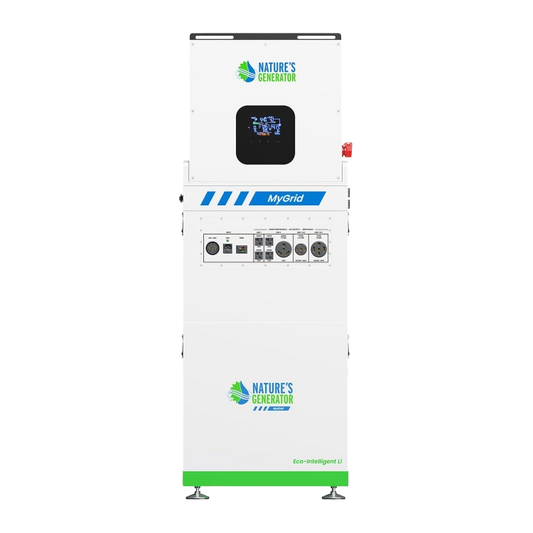
What Are Standby Phantom Loads and Why Do They Matter for Your Home Battery?
To maximize your emergency power supply, it helps to identify exactly what is happening inside your storage system when it sits idle. A standby phantom load, often referred to in electrical engineering as tare loss or idle power consumption, represents the energy consumed by an inverter simply to keep itself turned on and ready to deliver power.
When you activate the AC power switch on any solar power generator system, you are instructing the internal components to stand at attention. The system must immediately begin transforming the direct current (DC) electricity stored in your batteries into the alternating current (AC) electricity used by traditional household appliances.
This conversion process is not passive. Even if nothing is plugged into the outlets, the internal control boards, diagnostic sensors, LED displays, and safety monitoring systems are actively running. For homeowners relying on backup power systems during an extended blackout, ignoring these baseline phantom loads can lead to an unexpected and premature loss of power. Understanding how this drain impacts your system allows you to make informed decisions regarding energy conservation when the grid goes down.
Why Does Keeping the AC Switch On Drain Power When Nothing Is Plugged In?
Many users assume that if an appliance is turned off or completely unplugged, zero electricity leaves the battery bank. However, based on our team's extensive testing of backup systems, the inverter itself acts as a continuous electrical load the moment the AC switch is flipped to the on position.
To create the clean 120-volt or 240-volt pure sine wave power required by modern electronics, the inverter utilizes high-frequency switching transistors, capacitors, and transformers. These components must continuously vibrate and switch at thousands of cycles per second to maintain a steady voltage potential at the outlets. This electrical pressure is comparable to keeping a water hose turned on at the spigot with a closed nozzle; the pressure is maintained throughout the line, requiring energy to hold that state.
Additionally, large-scale systems designed to run high-surge appliances require robust internal components. These heavier components inherently demand more baseline energy to remain pressurized. If your system features a cooling fan designed to maintain safe operating temperatures, that fan may run periodically or continuously while the AC circuit is active, further accelerating the baseline drain on your battery cells.
How Much Battery Capacity Are You Losing to Phantom Inverter Loads?
The amount of energy lost to standby phantom loads depends largely on the size and engineering of the internal inverter. Small portable power stations might only lose between 5 to 15 watts per hour when idle, whereas large whole-house systems can draw anywhere from 30 to 100 watts just to keep the AC outlets energized.
While a 50-watt continuous draw might sound negligible at first glance, its cumulative effect over time is substantial. Let us examine how an average 50-watt standby load impacts a backup system over various intervals:
Cumulative Battery Drain from a 50-Watt Idle Inverter
|
Standby Duration |
Total Energy Consumed (Watt-Hours) |
Impact on a Standard 4,800Wh System |
|
2 Hours |
100 Wh |
Negligible baseline use |
|
8 Hours (Overnight) |
400 Wh |
~8.3% of total battery capacity lost |
|
24 Hours (Full Day) |
1,200 Wh |
25% of total battery capacity lost |
|
48 Hours (Weekend) |
2,400 Wh |
50% of total battery capacity lost |
As illustrated by the data, leaving the AC switch on over a single 24-hour period can consume 1,200 watt-hours of electricity without ever powering a single appliance. If you are navigating an extended multi-day power outage with limited solar recharge capabilities due to cloudy weather, losing a quarter of your total storage capacity to internal overhead can jeopardize your household security.
Real-World Scenario: How Standby Losses Impact Emergency Preparedness
Consider this practical example. During a severe winter storm, a family loses grid power and relies on their backup system to run their critical medical devices and a refrigerator. During the day, they plug in their devices, run their appliances, and everything functions seamlessly.
Before going to bed, the family turns off the refrigerator and disconnects all electronics to conserve energy for the morning, but they leave the primary AC master switch turned on. When they wake up eight hours later, they are shocked to discover that their battery capacity has dropped significantly, despite no appliances being active overnight.
This scenario highlights why understanding phantom loads is vital for operational readiness. The system spent the entire night maintaining a high-voltage AC output state, generating heat and running internal diagnostic systems for outlets that were completely vacant. In an emergency situation, that lost energy could have easily powered a cellular router, heated a thermal blanket, or kept a critical appliance running for several additional hours.
What Practical Steps Can You Take to Eliminate Standby Battery Drain?
Minimizing standby energy loss requires a combination of smart operational habits and strategic power distribution. Our team recommends implementing the following field-tested strategies to preserve your battery reserves:
-
Turn Off the AC Switch When Idle: The single most effective way to eliminate phantom inverter load is to turn off the AC master power switch whenever you are not actively drawing power from the household outlets. Make it a habit to click the switch off before sleeping or when leaving the property.
-
Utilize Native DC Ports for Low-Draw Devices: If you only need to charge smartphones, laptops, or run low-voltage LED lights, bypass the AC inverter entirely. Use the built-in USB ports or 12V DC cigarette lighter ports on your system. DC-to-DC power transfer bypasses the high-voltage inverter, drastically reducing baseline power consumption.
-
Consolidate Your Power Tasks: Instead of plugging appliances in sporadically throughout the day, group your electrical tasks together. Turn the AC system on, run your refrigerator to lower its temperature, charge all household devices to maximum capacity, and then turn the AC master switch off.
-
Employ Smart Power Strips: Plug multiple small appliances into a single high-quality power strip. When you are finished using those devices, flipping the switch on the power strip stops individual appliance phantom draws, ensuring that even if the main system stays active briefly, secondary appliance standby draws do not compound your energy losses.
How Does System Engineering Affect Overall Standby Efficiency?
When evaluating your backup options, it is crucial to match the inverter architecture to your specific energy management strategy. Systems designed with advanced split-phase inverters, such as the Powerhouse Gen 2, are engineered to deliver robust 120V and 240V power simultaneously to run heavy household loads like well pumps, clothes dryers, and central security systems.
Because whole-home solutions feature large, industrial-grade internal components capable of handling high startup surges, their baseline idle consumption will naturally be higher than that of a small portable power bank. This is why premium systems allow users to manage their input and output configurations deliberately. By understanding that a high-capacity system requires a dedicated baseline layout to maintain peak readiness, you can manage your solar recharge schedules and battery expansion modules effectively to offset the daily standby requirements.
What Backup Power Configuration Works Best for Your Daily Lifestyle?
Choosing the ideal system configuration requires balancing your need for high-output performance against your daily energy conservation goals. If your primary objective is to maintain an uninterrupted power supply for an entire residential property, opting for a comprehensive, high-output setup ensures you can run heavy appliances without overloading the system circuitry. You can browse the complete line of systems and accessories through the Nature's Generator product range to find the exact match for your home design.
For homeowners who choose to integrate an expandable battery architecture, the baseline standby load becomes far easier to manage. Adding extra battery pods increases your overall watt-hour capacity, meaning the percentage of total energy lost to daily inverter idle consumption shrinks relative to your total power reservoir. This allows you to maintain the convenience of an active AC circuit without compromising your overall system longevity during prolonged off-grid scenarios.
Maximizing Efficiency for True Energy Security
Managing standby phantom loads is one of the easiest ways to optimize your backup system and ensure your home remains safe during extended grid failures. By understanding that keeping the AC switch active strains your battery bank through internal inversion overhead, you can adopt smarter operational habits that preserve precious watt-hours. Remember to utilize native DC ports for small electronic devices, turn off the AC circuit when it is not actively powering your home, and consolidate your high-draw appliance tasks to make every single watt count.
Choosing premium emergency power systems helps create a strong and dependable layer of protection for residential energy resilience. Protecting that investment requires proactive management of your stored energy reserves. By applying these efficiency strategies to your daily setup, you can confidently maintain reliable, clean, and independent power for your household exactly when you need it most.


