


True energy independence is about seamlessly routing the sun’s energy straight into your home's existing walls. When the grid goes down, having immediate access to reliable backup power changes everything, and integrating a clean solar power generator is the smartest way to achieve it. Whether you are scaling up to a heavy-duty whole home power generator or managing a flexible portable backup power system, you need a safe, legal bridge to your breaker box.
This guide will answer exactly how a transfer switch works with a solar generator so you can safely distribute emergency power without running a single extension cord. We will break down why this specialized switch is an absolute necessity, explore how the physical connection handles your electrical load, and provide a clear roadmap to help you choose the best setup for your family.
Why Can't You Just Plug a Solar Generator Directly Into a Wall Outlet?
When a major storm causes a blackout, the immediate temptation for many homeowners is to find a quick fix. You might think about running a complex web of extension cords through open windows, or worse, trying to plug your generator directly into a standard wall outlet using a double-ended male cord. Our team always strongly warns against this. Plugging a generator directly into a home wall outlet without an isolating switch is a highly dangerous and illegal practice called backfeeding.
What are the hidden dangers of backfeeding?
Without a transfer switch to act as a barrier, the electricity created by your solar generator flows in reverse. Instead of just staying inside your home, the current travels backward through your outlets, passes through your main electrical panel, and goes out into the neighborhood power lines. This creates two catastrophic hazards:
-
Lethal risks for utility workers: When utility linemen are working down the street to fix the storm damage, they operate under the assumption that the neighborhood lines are completely dead. Your backfeeding generator can send an unexpected surge of high-voltage electricity down the line, risking severe injury or death for those workers.
-
Instant destruction of your equipment: When the main utility grid suddenly turns back on, a massive wave of electrical current will rush back into your home. Because there is no switch blocking the path, this grid power will collide violently with the power coming out of your solar generator. This instantly destroys your generator's internal inverter, ruins connected household electronics, and can easily spark a devastating house fire.
How does a transfer switch act as an isolating safety gate?
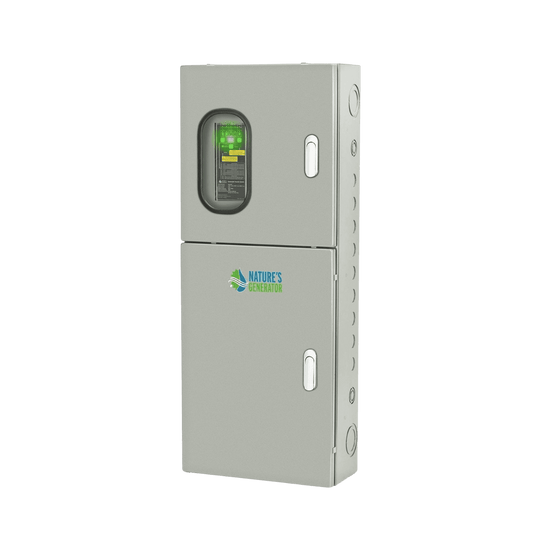
A transfer switch completely eliminates these risks by acting as a mechanical gatekeeper. It is a dedicated electrical panel installed right next to your home's main breaker box. Inside the switch is a physical mechanism that prevents your home from connecting to two different power sources at the exact same time.
When you flip the switch, it completely disconnects your chosen household circuits from the outside utility grid before it connects them to your solar backup generator. This design makes it physically impossible for your generator's power to leak out into the streets, keeping utility workers safe and ensuring your valuable clean energy equipment is protected when the grid comes back online.
How Does the Connection Between the Generator and the Switch Actually Work?
Connecting a solar generator to your home's electrical system is simple once you break down the physical path the energy takes. Based on our experience, understanding these components helps remove the anxiety around setting up an emergency backup system.
What physical components are required for the setup?
The physical connection relies on three primary components designed to handle high electrical currents safely:
-
The High-Output Outlet: Inside standard household setups, you use smaller wall plugs. A powerful solar generator features a heavy-duty, locking outlet (often a 30-amp port) designed to export large amounts of power simultaneously.
-
The Heavy-Gauge Power Cord: This is a thick, heavily insulated cord featuring specialized twist-lock connectors. You plug one end into the generator and twist it to lock it in place, ensuring it cannot accidentally pull loose while operating.
-
The Power Inlet Box: This is a weather-proof utility box mounted on the inside or outside wall of your home. The other end of your heavy-gauge power cord plugs directly into this inlet box, which is permanently wired straight to the transfer switch panel inside.
Once this path is established, the direct current (DC) power stored in your solar batteries is converted into alternating current (AC) power by the generator's internal inverter. This AC power flows through the cord, through the inlet box, and waits at the transfer switch panel until you choose to deploy it.
Manual vs. automatic transfer switches for battery storage systems
When deciding how to configure your home backup layout, you will choose between a manual transfer switch (MTS) and an automatic transfer switch (ATS). Based on our team's field testing, each style interacts differently with battery-based solar systems.
|
Feature / Metric |
Manual Transfer Switch (MTS) |
Automatic Transfer Switch (ATS) |
|
Trigger Mechanism |
Requires you to physically flip the switches. |
Detects grid failure and switches automatically. |
|
Best System Pair |
Ideal for portable setups like the Nature's Generator Elite. |
Best suited for permanently installed standby systems. |
|
Battery Management |
Highly efficient; you control exactly when energy is drawn. |
Can drain batteries quickly by activating heavy loads instantly. |
|
System Idle Draw |
Zero idle power consumption. |
Constant sensor monitoring uses minor standby power. |
|
Installation Cost |
Budget-friendly and straightforward for an electrician. |
Highly expensive with complex, invasive wiring. |
For most solar storage installations, our team strongly recommends a manual transfer switch. Because solar energy relies on a managed budget of battery capacity, you want to be the one who decides what runs during an emergency. An automatic switch might turn on luxury appliances or high-draw pumps while you are asleep, completely draining your battery reserves before sunrise. A manual switch keeps you in total control of every watt-hour.
Which Home Appliances Can You Run During a Power Outage?
You do not need to power your entire house to maintain a high level of comfort and safety during a blackout. Instead, our experience shows that the most successful emergency plans focus heavily on critical loads—the specific appliances required to protect your family and property.
Understanding your power budget: running watts vs. starting watts
Every electrical item in your home consumes a specific amount of power, which is measured in watts. When planning your backup system, you must account for two distinct types of electrical draw:
-
Running Watts: The continuous amount of power an appliance uses to stay turned on once it is running smoothly.
-
Starting Watts: The brief, powerful surge of extra electricity required by motorized appliances the exact second they turn on.
We can calculate basic power demand using the standard plain-text electrical formula:
Power (in Watts) = Voltage (in Volts) multiplied by Current (in Amperes), or simply written as P = V x I.
In this formula, P represents power in watts, V represents voltage in volts, and I represents current in amperes.
For example, a modern refrigerator might only need 400 running watts to keep your food cold, but it requires roughly 1,200 starting watts to kick the compressor motor into action. When choosing which branch circuits to route through your transfer switch, you must ensure that your solar generator has a high enough surge capacity to handle these temporary starting spikes.
Real-world customer experiences with critical load planning
Based on consistent customer feedback, homeowners who try to power their entire electrical panel at once often experience system overloads. Conversely, those who selectively choose their circuits enjoy long-lasting, uninterrupted backup power.
Consider a typical customer setup using a 4-circuit subpanel. Instead of wiring up the electric clothes dryer or the central air conditioning unit, the homeowner maps the transfer switch to four vital zones:
-
The Kitchen Refrigerator: Keeps food fresh and preserves vital medical supplies like insulin.
-
The Home Communication Hub: Powers the internet modem, Wi-Fi router, and smart security cameras so the family remains connected to emergency updates.
-
The Primary Living Area Lighting: Keeps main rooms safely lit using energy-efficient LED bulbs, eliminating the fire hazard of open candles.
-
A Utility Pump: Powers a basement sump pump or a well pump to ensure continuous water access and prevent indoor flooding.
By limiting the transfer switch to these essential circuits, you prevent your solar batteries from draining prematurely, ensuring you have steady, reliable energy throughout the entire duration of the grid failure.
How Do You Install and Use a Transfer Switch Safely?
Because installing a transfer switch requires mounting hardware directly inside your home's main electrical breaker panel, this is not a do-it-yourself project. Working with live electrical mains carries a severe risk of arc flash or electrocution. You should always hire a licensed, professional electrician to handle the physical installation. They will ensure that the wiring, grounding, and wire gauges comply perfectly with the National Electrical Code (NEC) and your local building regulations.
How to switch your power sources during a blackout
Once a professional has installed your transfer kit, operating the system during a power outage is simple and highly rewarding. To prevent unnecessary stress on your solar generator's inverter, our engineering team recommends following this exact operational sequence:
1.Turn off high-draw appliances: Reduces the initial electrical surge when lines switch over.
Walk through your home and turn off or unplug any large appliances connected to your designated backup circuits.
2.Turn on your solar generator: Ensures the unit is running smoothly before taking on a load.
Power up your clean energy unit and verify that the battery bank has a sufficient charge level.
3.Connect the heavy-duty power cord: Creates a secure physical link to your home panel.
Plug your twist-lock power cord into the generator's AC output, then plug the other end firmly into your home's power inlet box.
4.Flip the transfer switch toggles: Disconnects the grid and connects the generator.
Go to your transfer panel and flip the toggles from the LINE position, through the center OFF position, and down into the GEN position.
5.Turn your appliances back on one by one: Prevents multiple motors from surging at the exact same time.
Turn your household appliances back on slowly, starting with the heaviest item first (like the refrigerator) to let its motor stabilize.
When utility crews finally repair the neighborhood lines and grid power returns, you simply reverse this process. Flip the transfer switch toggles back to the LINE position, unplug your heavy-duty cord, and allow your solar panels to focus entirely on topping off your generator's battery bank so it is completely ready for the next unexpected emergency.
Conclusion
A transfer switch is the safest, most effective tool for connecting a solar generator directly to your home's infrastructure. It completely removes the inconvenience of running messy extension cords through your living spaces and eliminates the dangerous, illegal risks associated with backfeeding the utility grid. By isolating your home's most important branch circuits, you can maximize your clean energy reserves and keep your critical appliances running smoothly on quiet, self-sustaining solar power.
If you want to protect your home against the next major grid outage, our team at Nature's Generator designs highly robust Whole Home Systems that integrate seamlessly with an easy-to-use power transfer kit. Taking the time to properly configure your backup system today gives you total peace of mind tomorrow, knowing your household will stay warm, safe, and fully powered no matter what happens to the outside world.


