


Getting away from it all shouldn't mean losing your livelihood. For many of us, the dream of "tent life" is cut short by the reality of a dead laptop battery and a looming deadline. But thanks to the massive leap in battery tech, you no longer have to choose between a paycheck and a view of the mountains.
Powering a professional life from a nylon shelter is an art form. It requires a mix of high-tech gear, solar management, and a bit of "MacGyver" spirit. Here is exactly how modern digital nomads are making it happen.
1. Calculating Your "Digital Footprint"
Before you head to a big-box store like Home Depot to grab gear, you need to know your numbers. Most people overestimate how much power they need for lights and underestimate what a laptop draws during a video call.
-
Laptops: Usually pull 60W to 100W while charging.
-
Starlink: If you’re using satellite internet, factor in a constant 50W to 75W draw.
-
Small Perks: A specialized 12V travel kettle or a small fan can drain a battery faster than your phone ever will.
Once you have your daily Watt-hour (Wh) total, double it. This "buffer" is what keeps you working through a two-day rainstorm when the sun is nowhere to be found.
2. Choosing Your Hub: The Solar Power Generator
Your "hub" is the portable power station. While many people search for a solar power generator at Harbor Freight for budget-friendly entry-level models, seasoned nomads look for specialized systems designed for off-grid endurance.
If you are looking for a reliable Nature's Generator, here are the top picks for different nomad styles:
-
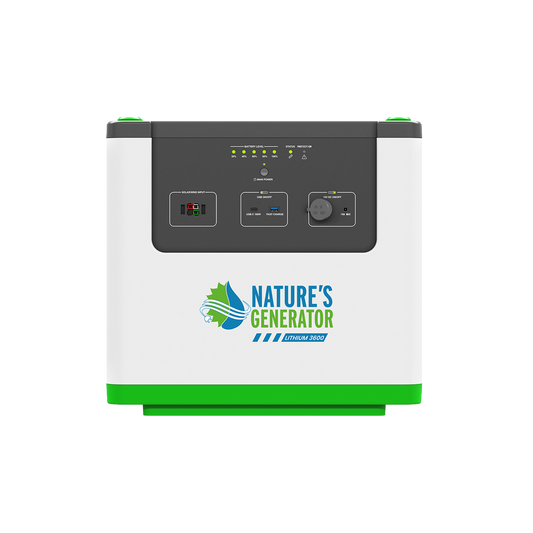
For the Power User: The Lithium 3600 is a beast. With 3600W of pure sine wave power, it can run your laptop, a portable fridge, and even a coffee maker without breaking a sweat.
-
The Gold Standard: The Elite offers 3600W of peak power and is built for those who need a rugged, high-output setup for extended stays.
-
The Lightweight Pro: The Lithium 1800 strikes a perfect balance. It’s lighter and more portable than the 3600, making it ideal for moving in and out of a tent.
-
The Classic Entry: The original Nature's Generator is a great starting point for those who need reliable, basic power for their laptop and phone without the higher price tag of lithium.
3. Harvesting the Sun: Solar Power for Camping
A solar power generator for camping is only as good as its input. You can have a massive battery, but if you can't fill it up, you're just carrying a heavy box of dead cells.
-
Portability: Foldable monocrystalline panels are the gold standard. They tuck behind a car seat and offer the highest efficiency.
-
Placement: You’ll find yourself "chasing the sun." Nomads often move their panels three or four times a day to keep them perpendicular to the light.
-
The Harbor Freight Factor: If you're on a strict budget, you can find glass-frame panels for a solar power generator at Harbor Freight that offer great value, provided you have the vehicle space to transport them safely.
4. Staying Connected in the Backcountry
You can have all the power in the world, but if you can't hit "Send," you aren't working.
-
Cellular Boosters: Devices like the WeBoost can turn one bar of LTE into a usable hotspot.
-
Dual-Sim Routers: Many nomads use a dedicated mobile router that can switch between carriers depending on which tower is closest.
-
Local Backups: Know where the nearest town with a Home Depot or a public library is; these are reliable spots for high-speed Wi-Fi and a quick AC wall-charge if your solar panels fail during a week of overcast weather.
5. Ergonomics: The "Tent Office"
Working from a sleeping bag sounds cozy for ten minutes. After two hours, your back will disagree.
-
The Table: A lightweight, roll-top aluminum camping table provides a stable surface for your laptop.
-
The Chair: Don’t settle for a basic stool. Invest in a chair with lumbar support. Your productivity is directly tied to your comfort.
-
The Shade: Heat is the enemy of electronics. Set up your "office" in the vestibule of your tent to keep your laptop from overheating in direct sun.
Living as a digital nomad from a tent is about more than just buying a solar power generator and driving into the woods. It’s about being intentional with your energy—both the electrical kind and your own. When you finally close your laptop and look out at a sunset that most people only see on a screensaver, the effort of managing your power grid becomes entirely worth it.


