


The hum of a refrigerator, the glow of a laptop, the steady rhythm of an HVAC system—these are the heartbeats of a modern home. We don’t just live in our houses; we plug into them. But when the grid falters due to storms or aging infrastructure, that heartbeat stops.
This has led many homeowners to ask a pivotal question: Can an electric generator for home use actually power my entire lifestyle, or is it just a glorified flashlight?
The short answer is yes—but the "how" depends entirely on your energy habits and the hardware you choose.
Moving Beyond Emergency Backups
Traditionally, home generators were seen as emergency insurance policies. You bought one to keep the food frozen until the "real" power came back. However, our lives have changed. With the rise of remote work and smart home ecosystems, a few hours of downtime is already a total disruption.
Today, we look at generators through the lens of lifestyle continuity. This means maintaining your standard of living without compromise.
1. Portable vs. Standby: Which Fits Your Life?
To determine if a generator can handle your needs, you first have to understand the two main categories of equipment.
Portable Generators (The "Budget" Tier)
Portable units are versatile. They typically run on gasoline or propane.
-
Capacity: 1,000 to 10,000 watts.
-
The Lifestyle Fit: These are best for "critical" needs. If you only care about the fridge and a few lights, a portable unit works. However, they require manual setup and constant refueling.
Home Standby Generators (The "Seamless" Tier)
These are permanent fixtures installed outside your home, much like an AC unit. They connect directly to your electrical panel and run on your existing natural gas or liquid propane line.
-
Capacity: 10,000 to 26,000+ watts.
-
The Lifestyle Fit: This is the only option for true restoration. With an automatic transfer switch, the generator kicks in within seconds. You don't have to lift a finger.
2. Calculating Your Energy "Load"
To power your entire lifestyle, you need to understand the math of your consumption. We measure this in Running Watts (constant use) and Starting Watts (the extra surge needed to kick-start a motor).
The Heavy Hitters
If your lifestyle includes these luxuries, you need a high-capacity standby unit:
-
Central Air Conditioning: A 5-ton AC unit can require 15,000 watts just to start.
-
Electric Water Heaters: These pull roughly 4,500 watts.
-
Electric Vehicle Chargers: Level 2 chargers can draw up to 11,000 watts.
Small Devices and Batteries
While we worry about the big appliances, we also rely on small tech. For context, many people use portable power banks to keep phones alive. If you've ever wondered about a 5000 mAh battery life in hours, it typically keeps a modern smartphone running for about 15 to 25 hours of moderate use. In a power outage, these small buffers are great for communication, but an electric generator for home is what keeps the actual house livable.
|
Appliance |
Running Watts (Avg) |
Starting Watts (Avg) |
|
Central AC (3-ton) |
3,500 |
10,000 |
|
Refrigerator |
700 |
2,200 |
|
Laptop |
50 |
50 |
|
Electric Oven |
3,000 |
3,000 |
3. Managed Power vs. Whole-House Power
Can you power everything? Theoretically, yes. But you have two ways to approach it.
The Whole-House Approach
You size a generator to handle every single breaker in your panel at once. If you want to run the dryer, the AC, and the dishwasher while a storm rages, you’ll likely need a large 22kW to 26kW unit. This is the gold standard for zero-compromise living.
The Managed Power Approach
Modern smart switches allow you to use a smaller generator by "managing" the load. If the generator hits its limit, it temporarily pauses a non-essential item (like the water heater) while the AC cycles. This saves you money on the initial purchase while keeping the house comfortable.
4. Solar and Battery Alternatives
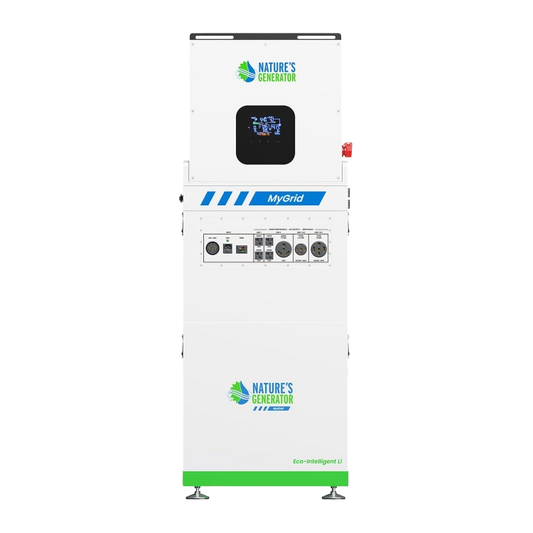
We can't ignore the rise of whole-home battery backups. Systems like the Tesla Powerwall or Nature’s Generator are changing the game.
-
Pros: Silent, no fuel storage, and integrates with solar for "infinite" runtime on sunny days.
-
Cons: Higher upfront cost. While a gas generator runs as long as you have fuel, a battery has a finite limit unless the sun is out.
5. Is the Investment Worth It?
Determining if an electric generator for home fits your life involves a look at the "hidden" costs of being without power.
-
Work Losses: For remote workers, two days of no internet can mean lost revenue.
-
Property Damage: If your sump pump fails, a flooded basement can cost $10,000+ in repairs.
-
Health and Safety: For those relying on medical equipment, power is a literal lifeline.
There is also an intangible benefit: the psychological peace of being the only house on the block with the lights on. Being able to take a hot shower and sleep in a cool room while the neighborhood is dark is a massive boost to your quality of life.
6. Maintenance: Keeping the Lights On
If you want a generator to power your life, you have to maintain it like a car.
-
Annual Service: Oil changes and spark plug checks are mandatory.
-
Self-Tests: Most standby units run a 15-minute "exercise" cycle weekly to ensure the battery stays healthy.
Yes, an electric generator for home can absolutely power your entire lifestyle.
If you are a minimalist, a high-end portable unit might be enough to keep your digital life afloat. But if you have a growing family in a suburban home, a standby generator is a transformative investment. It turns a potential disaster into a minor footnote in your week.


