


When the power goes out, a solar generator can do much more than keep a few devices running from extension cords. With the right transfer equipment, it can provide reliable backup power, work as a solar power generator, support a whole home power generator setup, or serve as flexible portable backup power.
For Nature's Generator customers, one of the biggest questions is how to connect a solar generator to a home's breaker box safely. Should you use an automatic or manual transfer switch? Is a manual transfer switch NEC compliant? Can you run 120V and 240V appliances? And does connecting a generator to the breaker box mean you can power your entire house?
This guide answers those questions so you can understand your options and choose the right setup.
Can you connect a solar generator to a breaker box?
Yes, but you need the right transfer equipment and a proper electrical installation.
A solar generator can supply power to selected home circuits or, with a correctly sized system and compatible equipment, a much larger portion of the home.
The key is how the generator connects to the electrical panel.
You should never use an improvised connection to feed a home's electrical circuits. The backup source needs to be isolated from utility power so the two sources cannot accidentally feed each other.
That's the job of a transfer switch.
A typical setup works like this:
Utility power → Transfer switch → Home circuits
During an outage:
Solar generator → Transfer switch → Home circuits
The transfer switch controls which source supplies the selected circuits.
Nature's Generator offers transfer-switch options for 120V/240V backup applications, including manual and automatic models.
Why is this important?
Without proper transfer equipment, you can create a dangerous backfeed condition. That can damage electrical equipment and create a serious hazard for utility workers.
A qualified electrician should design and install the connection based on your home's panel, circuits, generator and local electrical requirements.
What does a transfer switch do?
A transfer switch safely changes a circuit between utility power and backup power.
Think of it as a controlled gate between two power sources.
Under normal conditions, your home uses utility power. During an outage, the transfer equipment allows the backup source to supply the circuits connected to it.
There are two main types:
Manual transfer switch: You operate the switch yourself when the power goes out.
Automatic transfer switch: The system detects the outage and transfers the connected circuits automatically.
Both can work well. The better option depends on how you want your backup system to operate.
What is the difference between an automatic and manual transfer switch?
Manual transfer switch
A manual switch gives you control over when backup power is used.
This can be helpful during a long outage when you want to conserve battery power. You might run the refrigerator, internet equipment, lighting and a sump pump while leaving high-demand appliances turned off.
Nature's Generator offers a 120/240V 30A six-circuit manual transfer switch and a 120/240V 50A 12-circuit manual transfer switch.
See the Nature's Generator 30A transfer option
See the Nature's Generator 50A 12-circuit transfer switch
Automatic transfer switch
An automatic transfer switch detects the utility outage and switches the connected loads to the backup source without requiring you to operate the switch.
This can be useful when:
-
You're away from home during an outage.
-
You want backup power to start automatically.
-
Essential equipment needs power without manual intervention.
-
You prefer a hands-off setup.
Nature's Generator also offers automatic transfer-switch options for compatible 120V/240V systems.
See all Nature's Generator automatic transfer switches
Is a manual transfer switch NEC compliant?
Yes. A manual transfer switch can be NEC compliant when the equipment and installation meet applicable electrical requirements.
The NEC does not require every residential standby system to use an automatic transfer switch. The important factors are whether the equipment is suitable for the application, properly rated and installed so the backup source cannot be connected improperly to utility power.
That's why NEC compliance applies to the entire installation, not simply the transfer switch itself.
An electrician may need to verify:
-
Transfer equipment rating
-
Voltage configuration
-
Circuit selection
-
Wire sizing
-
Overcurrent protection
-
Grounding and bonding
-
Generator output
-
Panel configuration
-
Manufacturer instructions
-
Local permitting requirements
Your local authority may also have requirements beyond the national code.
Does an automatic transfer switch mean you can power the whole house?
No. A transfer switch controls the power source; it does not create more power.
This is one of the most important things to understand before buying a backup system.
Your home may have a large electrical service, but your solar generator may have much lower output. A transfer switch won't change that.
Backup capability depends on:
-
Continuous output
-
Surge or starting capacity
-
Battery capacity
-
Solar charging capacity
-
Connected loads
For example, a home might normally run a refrigerator, air conditioner, electric water heater, range, well pump and several other appliances. Running everything at once could exceed the generator's capacity.
Instead, identify your priority loads.
Keep running: refrigerator, freezer, internet equipment, lighting and essential outlets.
Use carefully: microwave, coffee maker and other high-draw appliances.
Turn off when possible: EV charger, electric water heater, large electric range or other heavy loads unless the system is specifically sized for them.
Good load planning can help your battery last much longer during an extended outage.
Can a solar generator run both 120V and 240V appliances?
Yes, but the entire system must support both voltages.
Many household devices use 120V power, while some well pumps, HVAC systems and workshop equipment use 240V.
The generator, transfer switch, wiring and connected circuits all need to be compatible.
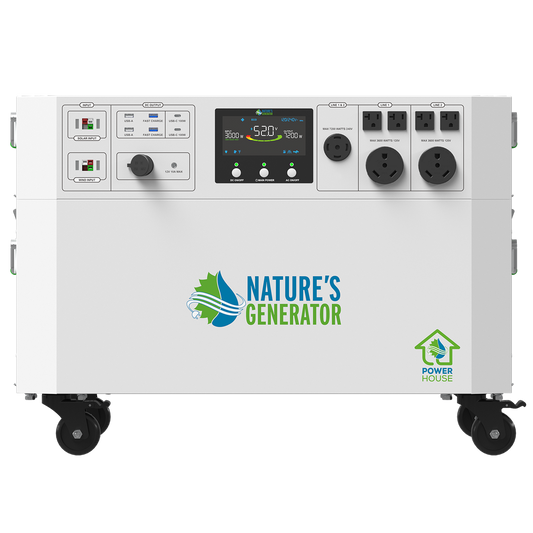
Nature's Generator's Powerhouse Gen 2 provides 120/240V output and up to 7,200W of power, with expandable configurations for larger backup needs.
Explore the Nature's Generator Powerhouse Gen 2
Practical example
Imagine your home needs:
-
Refrigerator on 120V
-
Internet equipment on 120V
-
Lighting on 120V
-
Well pump on 240V
A compatible 120/240V backup system may support these loads together. However, you still have to stay within the generator's total output and account for startup power.
Motors and compressors can draw significantly more power when they start, so running wattage alone may not tell the whole story.
How do you choose between a 30A and 50A transfer switch?
Choose based on your electrical setup, number of circuits and generator capacity.
A 30A transfer switch may be suitable for a smaller essential-load system with fewer circuits.
For example, you may want to back up your refrigerator, lighting, internet equipment and selected outlets.
A 50A transfer switch may make sense for a larger setup with more circuits or higher electrical demands.
But remember: a 50A transfer switch does not mean the solar generator can continuously deliver 50A.
The transfer switch rating and generator output are different things.
A useful rule is:
Size the transfer equipment for the electrical installation, then size the generator for the loads you need to run.
What should you power during a real-world outage?
The best backup setup isn't necessarily the one that powers the most appliances. It's the one that keeps your most important systems running for the longest time.
Short overnight outage
Prioritize the refrigerator, Wi-Fi, lights, phones and laptops.
Multi-day storm outage
Focus on refrigeration, communications, lighting, pumps and essential outlets. Limit high-demand appliances to preserve battery capacity.
Rural home with a well pump
Check the pump's running and startup requirements and confirm that your backup system can handle its 240V demand.
Working from home
You may prioritize your router, modem, computer, monitor, lighting and refrigerator instead of trying to power the entire house.
These examples show why backup systems should be sized around actual household needs rather than simply the home's electrical service rating.
What do customers care about in a home backup system?
Customer feedback around home backup power usually focuses on practical questions: How easy is the system to use? Can essential appliances stay on? How long can the battery last? Can solar panels recharge the system during a long outage?
These questions matter because outages don't always last a few hours.
During a short outage, convenience may be the priority. During a multi-day outage, conserving battery power becomes more important. When sunlight is available, solar charging can help extend runtime.
This flexibility is one reason homeowners consider solar generators for backup power.
Can you install a transfer switch yourself?
Breaker-panel work should be handled by a qualified electrician.
Even when the switch looks simple, installation can involve panel wiring, grounding and bonding, circuit protection and other electrical requirements.
Before installation, have an electrician confirm:
-
Which circuits you want to back up.
-
Their running and startup loads.
-
Whether you need 120V, 240V or both.
-
Whether the generator has enough continuous and surge capacity.
-
Which transfer-switch rating fits the system.
-
How grounding and neutral connections should be handled.
-
Which NEC and local requirements apply.
This can prevent you from purchasing equipment that doesn't fit your home's electrical system.
Which is better: automatic or manual transfer switch?
Neither is universally better. The right choice depends on how you use your backup power.
Choose a manual transfer switch when you want direct control, simpler operation and the ability to decide which circuits receive power.
Choose an automatic transfer switch when convenience and hands-free operation are your priorities.
Choose a larger backup system when your household has higher demands and needs more output, storage or support for multiple 120V/240V circuits.
The most important thing is to size the entire system together. A larger transfer switch cannot compensate for an undersized solar generator, and a powerful solar generator cannot make an incorrectly installed transfer system safe.
Frequently asked questions
Can I plug a solar generator directly into a breaker panel?
Not through an improvised connection. A proper transfer arrangement should be used to connect backup power while preventing an unsafe connection to utility power.
Is a manual transfer switch safe?
Yes, when properly rated, installed and used. The installation must prevent the utility and backup sources from being connected together unintentionally.
Does a transfer switch power every circuit?
Not automatically. The number of backed-up circuits depends on the transfer equipment, electrical installation and available generator capacity.
Can I run 120V and 240V circuits at the same time?
A compatible 120/240V system can support both, but the combined demand must remain within the system's capabilities.
Is a 50A transfer switch always better than a 30A model?
No. The correct rating depends on your electrical installation and backup system.
Which transfer switch should you choose?
A solar generator can be a practical way to keep essential home systems running during an outage, but the transfer switch is a critical part of the setup.
A manual transfer switch gives you more control and works well for essential-circuit backup.
An automatic transfer switch provides more convenience and can transfer backup power without requiring you to operate the switch.
Neither option replaces proper installation or careful load planning.
Before choosing a system, consider the appliances you actually need, their startup demands, whether you need 120V or 240V power and how long you want your backup system to run.
For homeowners looking for reliable backup power, Nature's Generator offers solar generator systems and compatible transfer equipment built around practical home backup needs.
The best setup isn't simply the one with the biggest numbers. It's the one that safely connects to your home, covers your priority circuits and provides enough stored and renewable energy to get you through the outage.


