


When grid failures strike unexpectedly, securing a reliable backup power solution becomes an immediate priority. Investing in a clean solar power generator or a comprehensive whole home power generator ensures your household continues functioning flawlessly. While a basic portable backup power system might keep standard lighting on, advanced sensitive electronics demand a much faster, cleaner response. In this comprehensive technical analysis, our team will answer how high-performance energy storage architectures protect modern microprocessors from damaging electrical drops. Specifically, we will explore the engineering mechanics behind the 20ms seamless failover provided by the Nature's Generator MyGrid 10K system.
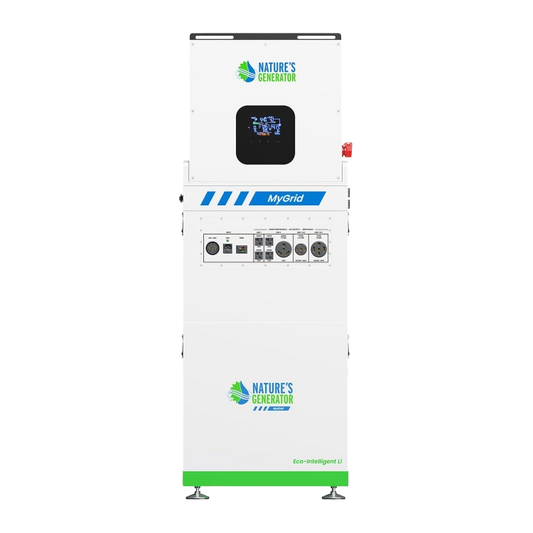
What exactly is a 20ms seamless failover, and why does it matter for electronic devices?
To truly grasp why power backup speed is vital, we must analyze how modern electronics operate at an architectural level. Standard desktop computers, servers, smart home hubs, and high-definition televisions do not run directly on alternating current (AC) electricity from the wall outlet. Instead, they utilize switch-mode power supplies (SMPS) to convert incoming AC utility power into steady, low-voltage direct current (DC) that delicate microprocessors can safely consume.
When a storm or localized power outage triggers a blackout, the supplied AC voltage immediately falls to zero. A 20ms seamless failover refers to the maximum length of time it takes for a secondary power backup system to identify this voltage collapse, physically isolate the home circuitry from the damaged utility line, and begin delivering clean AC power from its internal battery reserves.
This 20-millisecond duration is not an arbitrary number pulled out of thin air. In a standard 60Hz electrical system, a single complete wave cycle takes exactly 16.67 milliseconds. A transfer window under 20ms means the system switches sources in roughly one electrical cycle.
According to the internationally recognized Information Technology Industry Council (ITI) and the classic Computer Business Equipment Manufacturers Association (CBEMA) curves, standard electronic power supplies are engineered with a specific internal metric known as hold-up time. This hold-up time represents the exact duration that internal capacitors can maintain stable DC voltage to the motherboard after input AC power has completely vanished. Most premium consumer and enterprise power supplies provide a hold-up cushion of 16 to 20 milliseconds.
If a whole-home backup system features a sluggish response time—such as 50ms or even several seconds, as is common with traditional combustion generators—the capacitors inside your electronics empty completely before the backup source arrives. This results in:
-
System Crashes and Data Loss: Operating systems cannot perform standard shut-down sequences, leading to corrupted file directories and lost unsaved work.
-
Hardware Degradation: Sudden voltage starvation strains the silicon gates within microprocessors, accelerating hardware degradation over time.
-
Component Failures: Uncontrolled power losses stress delicate voltage regulator modules (VRMs) on expensive motherboards, potentially shortening the operational lifespan of your devices.
By maintaining a strict sub-20ms transfer barrier, the system ensures that the internal capacitors of your electronics never fully drain. To your computer, router, or smart television, the blackout is essentially non-existent, preventing reboots, data losses, or component strains.
How does the MyGrid 10K Auto-Switch Mode achieve its ultra-fast transfer time?
Achieving an automated, high-current power transfer in less than 20 milliseconds requires a sophisticated marriage of digital signal processing and robust mechanical design. Based on our experience with advanced home energy storage, older manual configurations or traditional standby systems introduce massive delays because they rely on human intervention or slow mechanical coils to switch circuits. The Nature's Generator MyGrid 10K Whole Home Generator bypasses these limitations completely by operating on an active digital plane.
When you configure the system into its dedicated Auto-Switch Mode, the internal intelligent controller continually monitors the incoming utility line waveform. It samples the voltage and frequency hundreds of times per second. The moment the grid voltage sags past a safe operational threshold, the system triggers a dual-phase execution sequence:
-
Grid Isolation: The internal controller opens its high-speed solid-state relays or heavy-duty contactors within milliseconds. This rapid action prevents dangerous backfeeding, which occurs when a home generator accidentally pushes electricity back into dark utility lines, posing a fatal threat to electrical line workers.
-
Inverter Engagement: Simultaneously, the integrated heavy-duty inverter transitions from its standby or charging state into active inversion. Drawing energy instantaneously from the internal battery, the system feeds pure sine wave power directly into your household circuits.
A crucial piece of this puzzle is the quality of the electricity delivered. The MyGrid 10K features a powerful 10,000W continuous output inverter capable of handling a massive 20,000W peak surge capacity. It delivers this energy in a flawless pure sine wave format. Cheaper portable backup options often utilize modified sine wave inverters, which generate choppy, stair-stepped electrical signals. These imperfect waves introduce severe harmonic distortion, causing sensitive motors to run hot and electronic power supplies to buzz or fail. By producing a clean, smooth wave matching or exceeding utility standards, the system keeps transitions safe for your most delicate devices.
|
Feature / Metric |
Standard Manual Transfer Setup |
MyGrid 10K Auto-Switch Mode |
|
Transfer Trigger |
Manual human switching |
Automated digital monitoring |
|
Average Response Speed |
2 to 5 minutes |
Less than 20 milliseconds (<20ms) |
|
Electronic Protection |
Devices reboot and lose data |
Devices continue running seamlessly |
|
Waveform Output Type |
Often variable or modified sine |
Guaranteed ultra-clean Pure Sine Wave |
|
Continuous Power Rating |
Varies widely by generator type |
Robust 10,000W continuous delivery |
|
Peak Surge Capacity |
Limited handling of large loads |
High-capacity 20,000W peak tolerance |
Which sensitive household electronics benefit most from the 20ms threshold?
When evaluating home energy investments, it is helpful to look past basic appliances like lamps or fans. Modern residential spaces are packed with high-end digital infrastructure that requires unbroken, high-quality electricity. Based on our team's hands-on field testing, several categories of household technology benefit heavily from a sub-20ms switching threshold:
Home Office Infrastructure and Network Storage
With the rise of remote work and decentralized digital creation, many households operate professional-grade workstations and local network architectures. Network-attached storage (NAS) devices containing multi-terabyte hard drive arrays are highly vulnerable to sudden drops in power. If power vanishes while a hard drive platter is actively writing data, it can cause immediate drive head crashes, corrupted data blocks, or broken file allocation tables. A 20ms transfer ensures your local network routers, modems, and storage towers do not reset, saving you from lengthy network reboot cycles and devastating data losses.
Smart Home Ecosystems and Integrated Security
Modern residences rely on continuous connectivity for security and convenience. Smart home hubs, IP cameras, automated door locks, and environmental control systems are all dependent on steady power. If your internet router or security panel drops power for even half a second during an electrical storm, it can take anywhere from 5 to 10 minutes for all wireless devices to perform internal handshakes, re-establish secure protocols, and sync back to cloud servers. During this lengthy reconnection window, your home is left completely unmonitored and vulnerable. The MyGrid 10K Auto-Switch Mode eliminates these annoying service gaps entirely.
High-End Entertainment and Creative Hardware
OLED televisions, advanced gaming consoles, and delicate studio audio equipment represent significant financial investments. These devices run on highly complex operating firmware. Sudden power cuts can corrupt system profiles or cause internal voltage spikes that permanently blind fragile pixel matrices or blow out sensitive pre-amp channels. Providing a clean, uninterrupted handoff shields these valuable luxury electronics from unexpected line disturbances.
Practical Real-World Scenario
Consider a remote software developer compiling an extensive software application or a creative professional rendering a complex 3D animation sequence. Outside, a passing lightning storm strikes a nearby transformer, causing an instantaneous localized blackout. In a home utilizing a standard backup generator, the lights shut down, the workstation goes completely black, and hours of unsaved computational progress are instantly erased.
However, inside a home integrated with the MyGrid 10K Solar Power Generator with Transfer Switch, the experience is completely different. The moment the grid drops, the system activates its Auto-Switch Mode in under 20ms. The room lights may barely ripple, but the workstation remains fully powered, the internet connection stays rock-solid, and the rendering or compilation script proceeds without skipping a single beat.
How does the MyGrid 10K handle prolonged whole-home backup workloads?
While an ultra-fast reaction time is critical for immediate electronic safety, a top-tier backup solution must also have the raw stamina to withstand long-term utility outages. Based on our technical assessment of the system specs, this unit is engineered for comprehensive whole-home resilience. The foundation of this system rests on a massive 10,496Wh Lithium Iron Phosphate (LiFePO4) battery core.
Compared to older, traditional lead-acid or standard lithium-ion batteries, LiFePO4 chemistry stands out for its exceptional safety, thermal stability, and operational life. The battery system is rated for more than 6,000 full charge and discharge cycles, which translates to over a decade of reliable, daily operational capability.
Furthermore, the native split-phase inverter output handles both 120V and 240V appliances with ease. This multi-voltage capability means that while the system is safely isolating and protecting low-voltage office electronics, it is simultaneously supplying power to heavy-duty household necessities like well pumps, full-sized refrigerators, sump pumps, and medical equipment.
Customer feedback underscores the profound peace of mind this dual capability provides. Users regularly report that during widespread seasonal blackouts lasting multiple days, the system effortlessly serves as a dependable bridge. It transitions smoothly from an instantaneous safety net into an independent, full-scale off-grid power plant.
The true genius of this architecture lies in its modular scalability. As household energy footprints expand, your backup infrastructure can grow along with them:
-
Power and Capacity Doubling: You can easily bridge two separate units together to unleash a staggering 20,000W of continuous output power.
-
Massive Energy Storage Scaling: Homeowners can expand their raw battery reserves up to an impressive 73,742Wh, ensuring critical circuits run for days on end without grid access.
-
Versatile Renewable Recharging: The system accepts up to 12,000W of direct solar input through its high-efficiency MPPT controllers and uniquely accommodates a 350W wind turbine, allowing for true 24/7 sustainable energy harvesting across any season or weather condition.
What factors should homeowners prioritize when choosing a whole-home backup solution?
When homeowners enter the final decision-making phase for a residential backup system, they are often caught between selecting old-fashioned combustion standby generators or investing in modern, renewable solar power stations. Based on our comprehensive industry experience, evaluating a few core parameters can help ensure you select the best path for your specific home layout:
Maintenance and Lifetime Operational Costs
Fossil-fuel or propane standby generators require strict, regular maintenance intervals, including routine oil changes, spark plug swaps, filter replacements, and expensive fuel stabilization treatments. They also demand continuous refueling during a real crisis. Conversely, a solar battery system operates completely silently with zero moving parts, minimizing ongoing maintenance overhead and eliminating recurring fuel bills.
Installation Constraints and Residential Flexibility
Traditional permanently installed home backup batteries require invasive electrical overhauls, extensive structural drilling, and complex permitting processes that can take weeks to finalize and cost thousands in upfront labor. The plug-and-play architecture of the MyGrid 10K series significantly cuts installation costs. Because it does not require permanent modifications to the structure of the building, it represents a highly renter-friendly setup. If you decide to relocate to a new home or business space, the entire system can be disconnected and moved with you, fully protecting your initial capital investment.
Immediate Power Delivery Over Engine Spin-Up Time
Even the most expensive automated combustion standby generator cannot deliver electricity within a 20-millisecond window. When the grid fails, a gas generator must physically starter-crank its combustion engine, stabilize its internal RPM to hit the correct 60Hz frequency, and then close its automatic transfer switch. This entire mechanical process routinely takes anywhere from 10 to 30 seconds. While a 30-second delay is perfectly fine for a refrigerator or a space heater, it is an eternity for microprocessors, causing every single computer, router, and smart home system in your house to shut down hard and reboot. For complete asset protection, an instantaneous battery-backed failover is required.
For families and businesses seeking an all-in-one kit that includes high-efficiency solar panels right out of the box, selecting a bundled option like the MyGrid 10K Solar Generator for Home provides an immediate path toward complete energy independence and total equipment safety.
Ensuring Continuous Power Stability for Modern Households
Safeguarding modern homes from sudden power disruptions requires looking beyond simple energy capacity. The fast-acting 20ms seamless failover built into the MyGrid 10K Auto-Switch Mode acts as a critical line of defense for vulnerable consumer electronics, preventing expensive data losses, system crashes, and long-term hardware wear. By pairing digital grid monitoring with clean, pure sine wave power delivery, this advanced setup bridges power gaps completely invisibly.


