


With unpredictable weather and rising utility costs, ensuring your home remains powered during a blackout is a necessity. Many homeowners find themselves choosing between two popular technologies: renewable solar arrays or backup generators. But what if you didn’t have to choose?
Nature’s Generator has spent years developing reliable backup power, eco-friendly home energy solutions that bridge the gap between sustainability and emergency readiness. In this comprehensive guide, we will answer exactly how you can combine solar panels with backup generators to create a resilient power ecosystem. We will explore the technical setup, cost-benefit analysis, and real-world scenarios that define why a hybrid approach is the gold standard for modern home energy security.

Why Should You Combine Solar Panels with a Backup Generator?
One of the most frequent questions our experts receive is: "If I have solar panels, why do I still need a generator?" It all comes down to what grid-tied solar systems aren't capable of. Most residential solar installations are designed to shut down during a power outage to prevent backfeeding, which can endanger utility workers repairing the lines.
By integrating a backup generator—specifically a solar-powered one like the Nature’s Generator Powerhouse V2—you create a fail-safe. While your rooftop panels may be inactive during a grid failure, your standalone solar generator continues to draw energy from its own dedicated panels and store it in high-capacity batteries.
Based on our experience, this combination provides three tiers of protection:
-
Redundancy: If the sun isn't shining during a multi-day storm, your backup system ensures your refrigerator and medical devices stay running.
-
Extended Autonomy: A generator allows you to cycle your loads, using stored solar power for essentials and the generator for high-draw appliances like well pumps or space heaters.
-
Sustainability: A solar-integrated backup system utilizes free energy from the sun, eliminating the need to store flammable fuel.
How Does a Hybrid Solar and Generator System Actually Work?
Understanding the mechanics of a hybrid system is crucial for making an informed decision. At its core, the system relies on an Automatic Transfer Switch (ATS) or a manual transfer switch to manage where your home’s electricity is coming from.
When the grid fails, the transfer switch isolates your home from the utility lines. In a hybrid setup, your solar panels act as the primary refueler for your battery bank. The generator component—which in our case is a high-powered inverter and battery hub—converts that stored DC energy into AC electricity for your home.
Real-World Usage Scenario: The 48-Hour Outage
Imagine a winter storm knocks out power on a Tuesday evening.
-
Night 1: Your Nature’s Generator system automatically takes over, keeping your lights and Wi-Fi on.
-
Day 1: Even with partial cloud cover, your solar panels begin recharging the system. You use the power to run a microwave and charge devices.
-
Night 2: Because you captured energy during the day, your battery bank is full again, providing silent power throughout the night without the noise or fumes of a gas engine.
What Are the Environmental Benefits of Choosing Solar Backup Over Gas?
Traditional backup generators are notorious for their environmental impact. Most run on gasoline, diesel, or propane—all of which produce carbon monoxide and greenhouse gases. Furthermore, the shelf life of gasoline is relatively short, requiring stabilizers or frequent trips to the gas station during a crisis.
Our team highlights these key eco-friendly advantages:
-
Zero Emissions: Solar generators produce no exhaust, making them safe for indoor use or placement on balconies.
-
Noise Pollution Reduction: Traditional generators can reach 70-80 decibels (similar to a vacuum cleaner or lawnmower). In contrast, solar backup systems operate silently, which is vital for maintaining peace in suburban neighborhoods and complying with local noise ordinances.
-
Resource Independence: You are no longer at the mercy of fuel supply chains. During major disasters, gas stations lose power or run out of fuel. Your fuel source—the sun—is delivered directly to your home every day.
Is it Cost-Effective to Integrate Both Systems?
While the upfront investment for a high-capacity solar generator and panel array may be higher than a budget gas unit, the long-term ROI is significantly better.
|
Feature |
Traditional Gas Generator |
Nature’s Generator Hybrid System |
|
Fuel Cost |
Constant ($3-$5 per gallon) |
$0 (Sunlight is free) |
|
Maintenance |
Oil changes, spark plugs, filters |
Minimal (No moving parts) |
|
Indoor Use |
Never (Fatal CO risk) |
Safe for indoor placement |
|
Tax Incentives |
Usually None |
Eligible for 30% Federal Tax Credit (ITC) |
By utilizing transfer switches, you can also use your solar generator daily to offset high-noon electricity rates (peak shaving), meaning the system pays for itself even when the grid is perfectly functional. Customer feedback often emphasizes that the lack of recurring fuel costs is the most satisfying part of owning a Nature's Generator system.
What Equipment is Needed for a Complete Home Backup Solution?
To build a truly resilient home energy system, you need more than just a battery. Based on our professional recommendations, a complete setup includes:
-
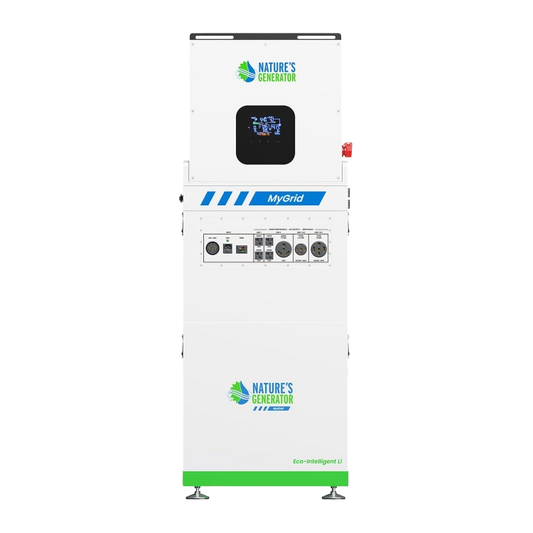
The Power Station: The brain of the operation, containing the inverter and battery. Systems like the MyGrid 10K offer 10,000Wh of capacity, enough to support a whole home power generator.
-
Solar Panels: We recommend monocrystalline panels for their high efficiency and durability.
-
Expansion Modules: One of the unique benefits of our design is scalability. You can add Power Pods to increase your storage capacity as your needs grow.
-
Wind Integration: For those in northern climates or coastal areas, adding a Wind Turbine ensures you can generate power at night or during stormy weather when the sun is obscured.
Ensuring Your System Meets Your Household Demand
Choosing a system that is too small will lead to frustration during an outage, while over-sizing can lead to unnecessary costs. To find your sweet spot, follow this simple calculation:
-
Step 1: List your essential appliances (Fridge, LED lights, Wi-Fi router, Phone chargers).
-
Step 2: Find their wattage (usually listed on a sticker on the back of the device).
-
Step 3: Estimate daily run time. A fridge might run for 8 hours total (cycling on and off), while a router runs for 24.
-
Step 4: Total the Watt-hours. (Wattage x Hours = Watt-hours).
If your total is 5,000Wh per day, you’ll want a system with at least 10,000Wh of storage to ensure you have a buffer for cloudy days. This is where the modularity of Nature’s Generator becomes a competitive advantage. You can start with a base unit and add capacity as you gain experience with your energy usage.
Taking the First Step Toward Energy Independence
Combining solar panels with a backup generator represents the pinnacle of modern home energy management. It offers the perfect balance: the daily savings and environmental peace of mind of solar power, coupled with the "always-on" reliability of a dedicated backup system.
By making the switch to a hybrid renewable system, you are not just preparing for an emergency; you are investing in a future where you control your own power. Whether you are looking to protect your family from the next big storm or simply want to reduce your carbon footprint, Nature’s Generator provides the tools to make energy independence a reality.
Key Takeaways to Remember:
-
Hybrid is better: Combining solar panels with a solar generator eliminates the weaknesses of standalone systems.
-
Safety first: Solar generators are the only safe option for indoor, fume-free backup.
-
Start scalable: You don't need to power your entire home on day one; start with essentials and expand your battery bank over time.
Check out our website and join the thousands of homeowners who have already achieved energy security with Nature’s Generator.


