


As the temperature drops, many homeowners look for ways to stay warm without sending their utility bills skyrocketing. A common question we receive from our community is: do portable heaters use a lot of electricity? Understanding the energy demands of these devices is crucial, especially if you are planning to power them using a whole home backup system like a Nature’s Generator.
Our team will break down exactly how much energy these units consume, how they impact your monthly expenses, and whether they are a viable option during a power outage when running on solar backup power. We aim to provide you with the data-driven insights needed to make an informed decision about your home heating strategy.

How Much Electricity Does a Portable Space Heater Actually Use?
To determine if a portable heater uses a lot of electricity, we first have to look at the wattage. Based on our experience with various home appliances, almost all standard portable electric heaters are rated at 1,500 watts (1.5 kW) on their high setting.
Understanding the 1,500-Watt Standard
The reason most heaters share this specific wattage is due to the limitations of standard household electrical circuits in North America. A typical 15-amp circuit can safely handle about 1,800 watts. Since a heater is considered a continuous load, safety regulations usually limit it to 80% of that capacity, which is exactly 1,440 to 1,500 watts.
When you run a 1,500-watt heater for one hour, it consumes 1.5 kilowatt-hours (kWh) of electricity. To put this in perspective:
-
A standard LED light bulb uses about 0.01 kWh per hour.
-
A modern refrigerator uses about 0.1 to 0.2 kWh per hour.
-
A portable heater uses as much energy as 150 LED bulbs running simultaneously.
So, the short answer is yes—relative to other small appliances, portable heaters are one of the most energy-intensive devices you can plug into a standard wall outlet.
How to Calculate Your Specific Usage
If you want to know the exact impact on your bill, you can use this simple formula our team recommends: (Wattage / 1000) x Hours of Use x Local Electricity Rate = Total Cost
For example, if you pay the national average of $0.16 per kWh and run a 1,500W heater for 8 hours a night: (1500 / 1000) x 8 x $0.16 = $1.92 per day. Over a 30-day month, that single heater adds $57.60 to your bill.
Which Type of Portable Heater is the Most Energy-Efficient?
While almost all electric heaters convert energy to heat at a 1:1 ratio (meaning they are technically 100% efficient at turning electricity into heat), the way they deliver that heat determines how much electricity you actually end up using.
Ceramic Fan-Forced Heaters
These are the most common. They use electricity to heat a ceramic element, and a fan blows the air across it.
-
Best for: Quick, temporary warmth in a small office.
-
Efficiency Reality: They provide instant heat but the room cools down the moment you turn them off. This often leads to the unit running constantly, which maximizes electricity draw.
Infrared Heaters
Infrared heaters don't heat the air; they emit electromagnetic waves that heat objects and people directly.
-
Best for: Specific "spot heating" (e.g., sitting at a desk or on a sofa).
-
Efficiency Reality: Our team has found that infrared heaters are excellent for perceived comfort. You might feel warm even if the room temperature is lower, allowing you to run the heater at a lower wattage or for shorter periods.
Oil-Filled Radiant Heaters
These look like old-fashioned radiators but are filled with thermal oil that never needs replacing.
-
Best for: Long-term heating in bedrooms or living areas.
-
Efficiency Reality: While they take longer to warm up, they have high thermal mass. They continue to radiate heat long after the heating element has cycled off. Based on customer feedback, these are often the preferred choice for those trying to maintain a steady temperature overnight without constant power spikes.
Can a Solar Generator or Home Backup System Run a Portable Heater?
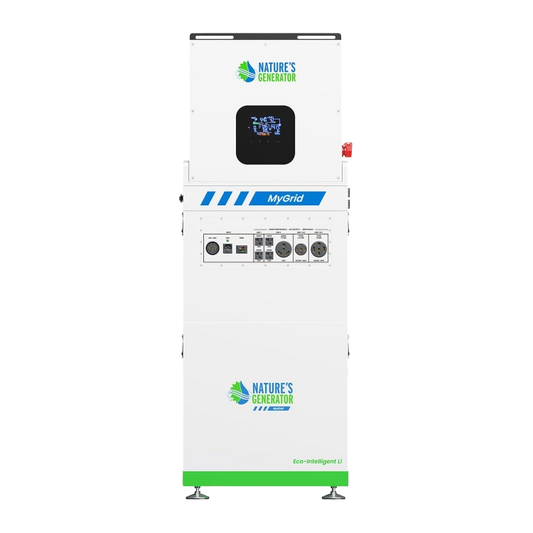
One of the most critical scenarios involves using a portable heater during a power outage. This is where the "high electricity use" of a heater becomes a technical challenge. If you are using a Powerhouse V2, you have the capacity to handle these heavy loads, but you must plan your energy budget carefully.
Calculating Runtime on Backup Power
If you have a 1,500W heater and a backup system with a 4.8kWh (4,800Wh) battery capacity:
-
Continuous Run: 4,800Wh / 1,500W = 3.2 hours of run time.
-
Thermostat Cycling: In a well-insulated room, the heater might only "cycle on" for 20 minutes of every hour. In this case, you could potentially get 9–10 hours of warmth.
Practical Tips for Emergency Heating
Based on our experience, we recommend using the "Low" or "Eco" setting (usually 750W or 900W) when running on a solar generator. This doubles your runtime and prevents the inverter from working at maximum capacity, which improves overall system longevity. For those looking for long-term resilience, integrating solar panels allows you to recharge your batteries during the day to offset the heavy draw of the heater.
Is Running a Space Heater Cheaper Than Turning Up the Central Furnace?
This is the ultimate "decision-stage" question for most homeowners. The answer depends on a concept we call "Zone Heating."
The "Zone Heating" Strategy
If you live in a 2,500-square-foot home but spend 80% of your time in a 200-square-foot home office, it is significantly cheaper to run a 1,500W portable heater in that office and drop your central thermostat to 60°F.
However, if you are trying to heat three or four rooms using multiple portable heaters, you will almost certainly spend more than if you simply ran your central gas or electric furnace.
-
Real-world scenario: We recently helped a customer analyze their bills. They were running three space heaters to avoid turning on their old, inefficient oil furnace. We calculated they were spending nearly $200 more per month on electricity than if they had just used the furnace.
Our Team's Recommendation: Use a portable heater only for the specific room you are in. If you find yourself plugging in more than two heaters, it is time to look at your central heating system or improve your home's insulation.
What Factors Make a Portable Heater Use More Electricity Than Necessary?
Not all high electricity bills are the heater’s fault. Often, environmental factors force the device to work harder.
-
Poor Insulation: If heat is escaping through drafty windows or uninsulated walls, the heater's thermostat will never reach its target, causing the 1,500W draw to be constant.
-
Improper Placement: Placing a heater against an exterior wall or under a window causes much of the heat to be lost to the outside immediately.
-
Lack of a Thermostat: Cheaper units only have "On/Off" or "High/Low" switches. Without a digital thermostat to cycle the unit off once a temperature is reached, the heater will pull maximum power indefinitely.
We always suggest our users pair their heaters with a simple plug-in timer or a smart plug if the unit doesn't have a built-in thermostat. This ensures you aren't accidentally heating an empty room.
Real-World Usage: Customer Feedback on Portable Heating
At Nature’s Generator, we stay in close contact with our users to understand how they use our systems in the wild. Many of our off-grid customers use portable heaters as a "bridge" solution.
-
The RV Experience: One customer reported that using a ceramic heater allowed them to save their propane for cooking and water heating. By plugging the heater into their Elite, they could maintain a comfortable 68°F inside their van during 30°F nights, provided they had enough solar coverage during the day to replenish the batteries.
-
The Home Office Scenario: Another user mentioned that they saved $40 a month during the winter by keeping their whole-house heat at 62°F and using a small 750W radiant heater under their desk.
These examples highlight that while heaters do use a lot of electricity, they can be part of a cost-saving strategy when used intentionally.
Safety and Circuit Overloads: A Professional Perspective
When you decide to use a high-draw appliance like a portable heater, safety must be your priority. Because these units pull so much current, they are a leading cause of home electrical fires.
-
Dedicated Outlets: Never use a power strip or extension cord with a portable heater. The high current can melt the plastic and start a fire.
-
Clearance: Always maintain a three-foot "clear zone" around the heater.
-
Tip-Over Protection: Ensure your chosen model has an automatic shut-off if it is knocked over.
If you are using a backup power system, ensure your inverter is rated for "Pure Sine Wave" output, like the ones found in Nature’s Generator products. This ensures the sensitive electronics in modern digital heaters won't be damaged by "dirty" power.
Balancing Comfort and Energy Consumption
So, do portable heaters use a lot of electricity? Yes. At 1,500 watts, they are among the most power-hungry devices in your home. That said, what counts as “a lot” depends on how you use them.
By employing a zone-heating strategy, choosing the right type of heater (like an oil-filled unit for long-term warmth), and ensuring your home is well-insulated, you can use these devices to actually lower your total energy costs. Furthermore, for those concerned about reliable backup power, a Nature’s Generator system provides a robust way to keep these heaters running even when the grid fails, provided you manage your energy budget wisely.


