


Having solar panels on your roof can give you a false sense of security, as most systems that are connected to the grid actually turn down during power outages to protect utility employees.
Here is where the journey towards energy autonomy starts. Many homeowners who have installed a SolarEdge system are seeking alternatives to the proprietary battery, which costs $15,000, in order to maintain power for their lights. One can reasonably wonder if a SolarEdge inverter can be used in conjunction with a system from Nature’s Generator.
The simple answer is yes, but there's more to it than just connecting two devices into a socket. It calls for an exclusive method known as AC coupling. Learn how these two beasts may complement each other to keep your house operational in the event of a grid outage with the help of this comprehensive guide.
What is SolarEdge and How Does It Benefit You?
Before we dive into the wiring, we need to understand the heartbeat of your system. What is SolarEdge? Simply put, it is one of the most popular and efficient solar technology brands in the world. Unlike traditional systems that treat a whole string of panels as one unit, SolarEdge uses a smart, optimized approach.
Most solar setups suffer from the Christmas light effect—if one panel is shaded by a tree or covered in bird droppings, the performance of the entire string drops. SolarEdge fixed this. By placing a small device called a power optimizer under every single panel, they ensure that each module works at its maximum potential regardless of what its neighbor is doing.
How Does SolarEdge Work?
To understand the connection to a backup source, you have to know how does SolarEdge work in a standard environment. The process follows a very specific path:
-
Optimized Collection: The power optimizers on your roof collect DC electricity from the panels.
-
Fixed Voltage: These optimizers send that power down to the SolarEdge inverter at a constant, fixed voltage.
-
Conversion: The inverter’s main job is to turn that DC (Direct Current) into AC (Alternating Current), which is the type of electricity your toaster, TV, and lights actually use.
-
Grid Interaction: In a standard setup, the inverter stays in sync with the utility grid. If the grid goes down, the inverter is legally required to shut off—leaving you in the dark even if the sun is shining.
The Nature’s Generator Solution
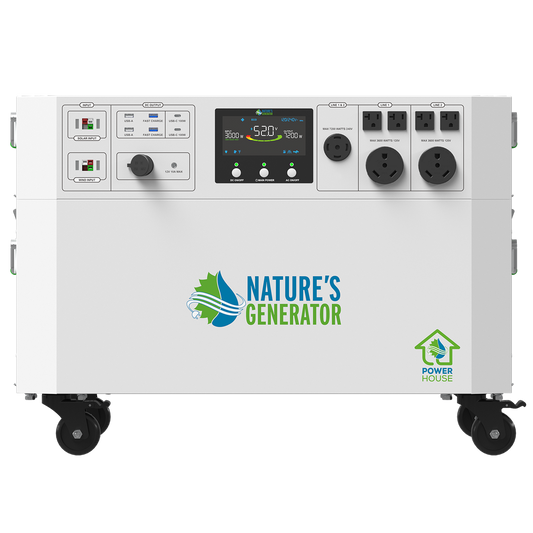
Let’s talk about Nature’s Generator. They offer a portable, expandable power station designed to provide clean energy without the noise or fumes of a gas-powered unit. While many people use them for camping or tailgating, the higher-end models, like the Powerhouse or the MyGrid 10K, are built for home backup.
The beauty of a Nature's Generator is its versatility. It contains its own internal battery, charge controller, and inverter. It is essentially a miniature power plant in a box. But the real magic happens when you try to bridge the gap between your existing rooftop solar and this portable battery.
Can They Actually Talk to Each Other?
Technically, a SolarEdge inverter and a Nature’s Generator are two different species. SolarEdge is a grid-tie system, while Nature’s Generator is primarily an off-grid or supplemental system. However, they can be made to work together through a setup known as an AC-coupled battery backup.
In this scenario, you aren't plugging the panels directly into the Nature’s Generator. Instead, you are using the Nature’s Generator to fool the SolarEdge system into thinking the grid is still active.
How the Connection Works:
-
The Transfer Switch: You install an Automatic Transfer Switch (ATS) or a manual transfer sub-panel.
-
Simulating the Grid: When a blackout occurs, the Nature’s Generator kicks in. It provides an AC signal to your home’s backed-up circuits.
-
The Wake-Up Call: The SolarEdge inverter senses this AC signal, believes the grid has returned, and starts producing power again.
-
Recharging the Loop: Any solar energy not used by your home’s appliances can flow back into the Nature's Generator to recharge its batteries.
Step-by-Step: Connecting the Systems
If you are planning to integrate a Nature’s Generator with your SolarEdge inverter, here is the general roadmap. Note: This involves high-voltage wiring and should always be performed or inspected by a certified electrician.
1. Choose the Right Generator Model
You cannot use a tiny portable unit for this. To successfully AC-couple with a SolarEdge inverter, you need a unit that supports 240V output (if your inverter is 240V) and has enough capacity to handle the surge. The Nature’s Generator Powerhouse or the MyGrid 10K are the primary candidates for this type of integration.
2. Install the Transfer Switch
This is the most critical piece of hardware. The transfer switch sits between your main electrical panel, your backed-up loads (like the fridge and lights), and your generator. It ensures that your backup power never back-feeds into the utility lines, which is a major safety hazard.
3. Wiring the AC Input/Output
The Nature's Generator connects to the transfer switch. When the power goes out, you switch the selected circuits over to the generator. The SolarEdge inverter must be wired such that it is on the load side of that transfer switch. This allows the inverter to see the AC wave generated by the Nature’s Generator.
4. Managing the Load
This is where it gets tricky. If your solar panels are producing 5,000 watts of power but your house is only using 1,000 watts, that extra 4,000 watts has to go somewhere. It will flow into the Nature's Generator to charge the batteries. However, if the batteries are full and the solar is still pumping out power, the system could overload. High-end setups use frequency shifting to tell the SolarEdge unit to throttle down, but with a portable generator, you must be careful not to exceed the unit's charging limits.
Connecting a Nature’s Generator to a SolarEdge inverter is a clever, budget-friendly way to achieve blackout protection. It bypasses the need for expensive, permanent battery installations while making the most of the solar panels you already have on your roof.
By understanding how does SolarEdge work and utilizing the AC-coupling method, you turn your home into a resilient microgrid. You get the peace of mind that comes with knowing that when the next storm hits, your coffee maker will still work, your phone will stay charged, and your house will remain the brightest one on the block.
The combination of SolarEdge's efficiency and Nature’s Generator's versatility is a match made in renewable energy heaven. It is about taking control of your power and ensuring that the click of a blackout is followed by the hum of your own personal power station.


