


Have you ever sat in your living room during a storm, staring at a dead fridge and a silent WiFi router, while a $50,000 battery sat perfectly charged in your driveway? It feels like a missed opportunity, doesn't it? Well, the days of being left in the dark are officially over.
The secret weapon in the modern EV owner's toolkit is the electric vehicle load adapter. This clever piece of tech transforms your sleek commuter car into a high-capacity silent powerhouse. In this guide, we will break down exactly how this works, why it beats a gas generator, and how you can get started today.
What is an Electric Vehicle Load Adapter?
At its simplest, an electric vehicle load adapter is a bridge. Most electric cars are designed to take power in, but only specific models are engineered to push it back out. This feature is known as Vehicle-to-Load, or V2L.
The adapter itself is a heavy-duty plug that fits into your car’s charging port. Instead of a cord leading to a wall outlet, the adapter has a standard three-prong household socket on the end. When you plug it in, your car’s onboard computer recognizes the device and begins sending electricity from the massive floor-mounted battery out through that socket.
Why You Need One
-
Emergency Backup: Keep your fridge running and phones charged during blackouts.
-
Glamping: Run an electric grill, a projector, or even a coffee maker at a remote campsite.
-
Work Sites: Power heavy-duty drills or saws without needing a noisy gas motor.
How Vehicle Load Works: V2L Adapter Explained
If you are wondering how vehicle load works V2L adapter style, it all comes down to the inverter. Your car’s battery stores energy as Direct Current (DC). However, your home appliances need Alternating Current (AC) to function.
When you activate the V2L system, the car uses its internal power electronics to "invert" that DC energy into 120V or 240V AC power. The adapter acts as the physical gateway, safely delivering that electricity to your devices.
Most modern systems provide around 1.8kW to 3.6kW of continuous power. That is more than enough to handle a full-sized refrigerator, several lamps, a laptop, and a television all at once.
Vehicle Load Charging vs. Discharging
It is important to understand the terminology here. Vehicle load charging refers to the bidirectional flow of energy. While standard charging fills your car up, V2L allows for "discharge" mode.
The beauty of this system is the control. Most EVs allow you to set a discharge limit through the infotainment screen. For example, if you are worried about having enough range to drive to work the next day, you can tell the car to stop providing power once the main battery hits 30%. This prevents you from accidentally "draining the tank" while making toast.
Why EVs Beat Gas Every Time
For decades, the gold standard for backup power was the portable gas generator. But if you have ever tried to start one in a rainstorm, you know the struggle. They are loud, they vibrate, and they emit deadly carbon monoxide.
Using an EV as a power generator offers a massive list of upgrades:
-
Silent Operation: You can run your V2L adapter at midnight in a crowded suburb, and your neighbors won't hear a peep.
-
Safety First: Because there are no exhaust fumes, you can technically use the power while the car is parked in a garage (though keeping the area ventilated is always smart).
-
Low Maintenance: Gas generators have carburetors that clog and oil that needs changing. An EV adapter has zero moving parts.
-
Instant Power: There is no pulling a ripcord or checking fuel levels. You just plug in the adapter and hit start.
Is Your Car Compatible?
Not every EV on the road is ready for a V2L adapter just yet. This technology is a standout feature in newer models that prioritize "lifestyle" utility.
The Heavy Hitters
-
Hyundai IONIQ 5 & 6: These are the gold standard for V2L. They often come with an adapter included in the trunk.
-
Kia EV6 & EV9: Built on the same platform as Hyundai, these offer incredible discharge rates.
-
Ford F-150 Lightning: This truck takes it a step further with Pro Power Onboard, which has outlets built directly into the bed and frunk.
-
Tesla Cybertruck: The first Tesla to officially embrace the idea of powering external tools and homes directly from the port.
If you own an older EV or a Model 3/Y, you might not be able to use a port-side adapter. Always check your owner's manual for V2L or V2H compatibility before buying hardware.
Top Tips for Using Your Adapter Safely
To get the most out of your setup, follow these simple rules:
-
Use Heavy-Duty Cords: If you are running a line from your driveway into your kitchen, use a 12-gauge or 14-gauge outdoor extension cord to prevent overheating.
-
Watch the Watts: Avoid plugging in two high-heat items at once. For example, don't run a space heater and a microwave on the same adapter outlet, or you might trip the car's internal circuit breaker.
-
Keep it Dry: While most adapters are built for outdoor use, try to keep the connection point covered during heavy rain or snow.
-
Set Your Limits: Always leave yourself at least 20% battery so you can reach a fast charger once the grid comes back online.
An electric vehicle load adapter is the ultimate "peace of mind" purchase. It turns a car—which is usually a passive expense—into a proactive tool for survival and comfort. Whether you are prepping for the next big storm or just want to make your next camping trip a bit more luxurious, V2L technology is the future of energy independence.
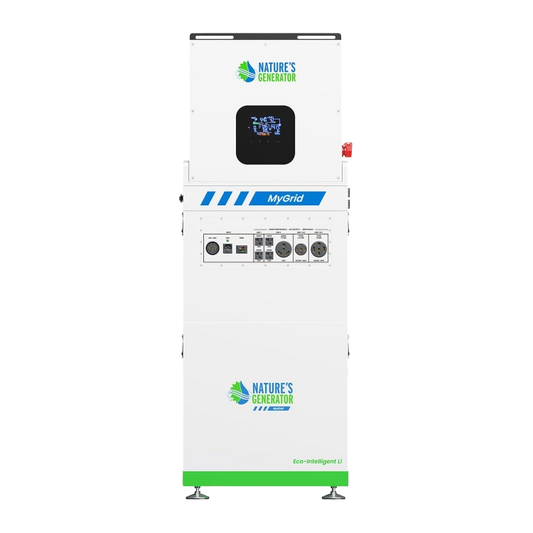
With the Nature's Generator MyGrid 10K, you can create a seamless energy loop between your house and your car. This system allows you to integrate your electric vehicle to run your home, use your home solar to top off your car, or rely on the MyGrid 10K unit for specialized vehicle load charging when you need a boost.


