


Owning an electric vehicle (EV) is great, but relying on a shaky power grid to charge it is not. If you want reliable backup power, a clean solar power generator, a strong whole home power generator, or a simple portable backup power setup, you need a smart plan. At Nature’s Generator, we believe in giving you control over your electricity. In this guide, we will show you how EV owners are using solar energy to build self-sustaining home microgrids. We will show you exactly how to power both your household and your vehicle independently, ensuring your daily routine never skips a beat when a blackout hits.
What is a home microgrid, and how does an electric car fit into it?
A home microgrid is like your personal, miniature power company. It is a system built right at your house that makes its own electricity (usually from solar panels), stores it in large batteries, and uses it to power your lights, fridge, and electric car.
When you buy an EV, you quickly realize that plugging a massive battery into a regular home outlet can double or triple your daily energy use. When electricity rates are high or blackouts happen a lot, keeping your car charged gets really frustrating.This challenge is fixed by microgrids, which essentially transform you into an independent utility provider.
Can I just run my house off my electric car's battery?
People usually ask us if they can use their electric car's big battery to run their house during a blackout.
While some newer cars offer this feature (known as vehicle-to-home or V2H), relying on your car as your only home backup battery has some big downsides:
-
It shortens the lifespan of your pricey car battery: Using your car to power high-energy home devices forces the battery to age much faster, potentially ruining its warranty coverage.
-
The "not home" problem: Your backup power goes wherever your car goes. If you are at work or the grocery store and a storm knocks out the power at home, your family is left in the dark and your food spoils.
-
High costs: Setting up your car to send power backward into your home requires special, expensive chargers and professional electrical work that can cost thousands of dollars.
Because of this, we recommend having a dedicated battery system at home. This keeps your house safe 24/7, while your EV remains a backup option for emergencies.
How do solar panels, home batteries, and EVs work together?
Making these three parts work as a team is a lot simpler than you might think.
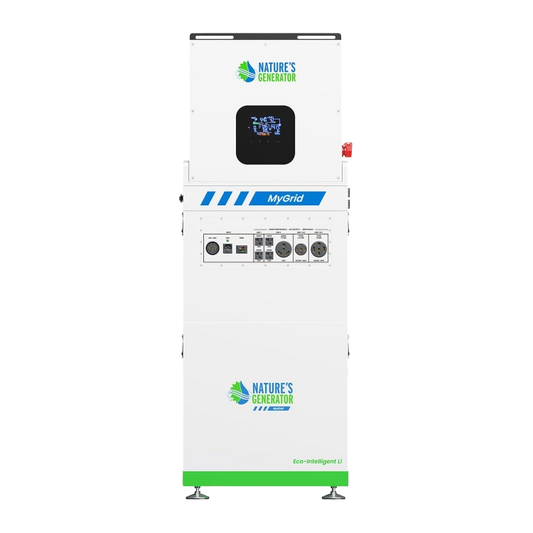
Your solar panels catch the sunlight and create raw electricity. This power flows into a home battery hub, like our expandable MyGrid 10K. This device stores the electricity and transforms it into the standard current required to run your home appliances and vehicle charger. When you plug your car in, it drinks up clean, free sunshine stored right in your home battery.
Why are EV owners rushing to build their own solar energy setups?
People are moving away from the traditional power grid for two main reasons: high electric bills and unreliable service.
The shock of charging an EV on the public grid
Electric cars need a lot of fuel, it just happens to be electricity instead of gasoline. A standard EV battery holds about as much power as a regular home uses in two entire days!
To make matters worse, power companies love to charge "peak rates" during the evening—the exact time you probably plug your car in after getting home. In some states, electricity during these hours can cost three times as much as it does during the day. By making and storing your own solar power, you can charge your car using free, clean energy captured while the sun was shining, bypassing the power company's expensive traps.
Why standard solar panels stop working during a blackout
It shocks many to discover that regular rooftop solar panels will instantly turn themselves off if the local power system fails.
Power companies design them this way for safety. If your panels kept pushing electricity into the neighborhood lines while workers were trying to fix a broken pole, it could seriously hurt them.
An off-grid microgrid is different. It has a built-in switch that safely cuts your home off from the neighborhood lines during a blackout. This keeps your solar setup running so you can heat your house, keep your refrigerator powered, and juice up your car without interruption.
A simple step-by-step guide to building your home backup system
Setting up a personal power system is easier than you think if you focus on one small task at a time.
Step 1: Track your daily power habits
You must understand your actual electricity consumption before you start shopping for any equipment. Let's look at a simple real-world example:
Imagine you drive your electric car 40 miles a day. On average, driving that distance uses about 12 kilowatt-hours (kWh) of electricity.
Now, let's say the rest of your home—your fridge, lights, TV, and fans—uses about 20 kWh of electricity per day.
Add those two numbers together:
12 kWh (Car)+ 20 kWh (Home) = 32 kWh of total daily energy needed
To get 32 kWh of energy from the sun, you need to look at how much strong sunlight your area gets. Assuming your roof gets around five hours of strong sun each day, an 8 kW solar system should generate enough electricity to run your house and vehicle entirely on your own.
Step 2: Select the perfect control hub and battery backup
A standard, small portable generator is like a garden hose—it's great for filling a bucket, but it can't run your whole house or charge your car quickly. To charge an EV at a decent speed, you need a system that can handle "split-phase" power (240 volts). This is the same heavy-duty power your laundry dryer or central air conditioner uses.
A system like the MyGrid 10K acts as the brain of your home microgrid. It can output both 120-volt power (for small electronics) and heavy-duty 240-volt power (for fast EV charging). Best of all, it is modular. This means you can easily add more battery "pods" later if your energy needs grow.
Step 3: Use smart power habits to prevent system overloads
Even if you have top-tier backup equipment, you must be mindful of how much energy you draw during a blackout. A fast EV charger can pull a massive amount of electricity all at once. If you try to charge your car at full speed while running your air conditioner, microwave, and electric stove, your system might safety-trip to protect itself.
Here is how to avoid that:
-
Lower the speed of your car charger: You can easily slow down how fast your vehicle powers up by adjusting the settings in your car's menu or on your smartphone. Charging your car slower uses far less power all at once, leaving plenty of juice for your home.
-
Charge when the sun is high: Plug your car in during the middle of the day. This lets the power from your solar panels go straight into your car, saving your battery storage for when the sun goes down.
-
Pick your must-haves: Keep your fridge, home security, and internet on one main circuit so they always get power first.
Nature’s Generator vs. DIY setups: Which is better?
When building your home microgrid, you can either buy a pre-built, ready-to-use system or try to piece one together yourself from scratch.
|
Feature |
Nature's Generator MyGrid 10K |
Custom DIY Setup |
|
Setup difficulty |
Easy (Plug-and-play, ready to go) |
Hard (Requires advanced wiring and tools) |
|
Safety |
Fully tested and certified |
Up to you to build and secure |
|
Growth |
Easy to add more battery pods later |
Requires complex calculations and rewiring |
|
Installation time |
Less than 1 hour |
Days or weeks of planning and work |
|
Wind turbine options |
Built-in plug for wind power |
Requires buying extra specialized gear |
While buying individual parts online might seem cheaper at first, the extra costs for wires, safety fuses, custom boxes, and hiring an expensive electrician add up incredibly fast. An all-in-one system like our Whole Home Power System saves you time, stress, and money by working perfectly right out of the box.
How everyday folks charge their EVs when the power goes out
To see how a home microgrid works in real life, let's look at how homeowners handle a sudden emergency.
1.See What You Have to Work With: Check your battery levels and the weather.
When the power grid goes down, look at your home battery screen. See how much power you have stored and check the sky to see if you will get good sunlight today.
2.Save Your Power for What Matters: Turn off things you don't need.
Turn off extra lights, computers, and secondary appliances. Keep your power focused on your fridge and basic necessities.
3.Slow Down Your Car's Charger: Change your car's settings to a slower charge.
Plug your car in, but set it to charge slowly. This prevents the car from draining your home battery too fast.
4.Charge During Peak Sunshine Hours: Let the sun do the heavy lifting.
Let your car charge during the brightest hours of the day. This direct solar power keeps your home battery full and ready for the night.
Keeping cars moving during wildfire season
In places like Northern California, power companies often shut off the grid during dry, windy days to prevent wildfires. This can leave entire towns without power for days. For EV owners, this used to mean they couldn't charge their cars to evacuate if a fire got too close.
By using high-power solar generators from Nature’s Generator, families in these high-risk areas now have total peace of mind. During a safety blackout, their home systems automatically disconnect from the grid, keeping their lights on and letting them add 15 to 20 miles of emergency driving range to their cars every day using nothing but free solar power.
Become your own power company and build a resilient energy future
Buying an electric vehicle is a great first step, but taking control of how you power that vehicle is where true independence begins. By building a simple, self-sustaining home microgrid, you protect your family from rising utility bills, unexpected blackouts, and grid emergencies.
As you plan your setup, keep these three simple rules in mind:
-
Know your daily energy needs so you choose a battery and solar setup that can actually handle your car and your home.
-
Make sure your system can handle 240-volt power so you can charge your car at a practical, helpful speed.
-
Choose an easy-to-use, expandable system that can grow with your family over time without requiring you to start from scratch.
We build reliable, straightforward systems designed to make clean energy simple and accessible for everyone. If you are ready to secure your home and power your vehicle on your own terms, visit Nature's Generator today to find the perfect setup for your lifestyle.


