


As temperatures soar across the country, homeowners face a recurring financial crisis on their monthly utility statements. Finding reliable backup power becomes critical as local grids strain under unprecedented cooling loads, while investing in an eco-friendly solar power generator or a robust whole home power generator offers permanent, long-term financial relief. Based on our team's extensive field experience, securing a high-capacity portable backup power system protects your household budget from predatory peak rates while keeping your family safe.
At Nature’s Generator, we regularly review data from regional utility providers and speak with families shocked by their sudden mid-summer cost spikes. Understanding exactly Why Summer Is the Most Expensive Season for Home Electricity is the critical first step toward reclaiming control over your household operating costs. In this comprehensive analytical guide, our engineering and energy experts answer your most pressing seasonal power questions and provide field-tested, actionable strategies to permanently mitigate your summer cooling expenses.
Why Do Electricity Bills Spike So Dramatically During the Summer Months?
To solve the summer pricing crisis, we must first examine the thermodynamic and economic forces that create the perfect storm on your power bill. The root cause is a combination of intensive appliance utilization and aggressive utility pricing structures designed to maximize revenue during periods of high grid stress.
How Much Excess Power Does Air Conditioning Actually Consume?
Air conditioning systems operate on a vapor-compression refrigeration cycle, which forces heat out of your living space against a steep outdoor temperature gradient. Based on our team's mechanical testing, a standard 3-ton residential central air conditioning system draws between 3,500 and 5,000 watts of electricity per hour of continuous operation.
During mild spring months, your AC might cycle on for only two to three hours a day. However, when ambient outdoor temperatures exceed 90°F, that same system frequently runs for 10 to 14 hours daily. Mathematically, this shifts your daily consumption from roughly 10 kilowatt-hours (kWh) to over 50 kWh for cooling alone. At an average national electricity rate, this single appliance can add hundreds of dollars to your monthly statement over the course of a hot summer.
What Are Peak Demand Hours and How Do Utilities Exploit Them?
Many utility companies have transitioned away from flat-rate billing to a predatory system known as Time-of-Use (TOU) pricing. Under TOU structures, the price per kWh is tied directly to real-time grid demand.
When families return home from work, turn on appliances, cook dinner, and crank down their thermostats, the grid faces immense strain. Utilities exploit this behavior by charging their highest rates precisely during these hours. If you run your AC at 5:00 PM, you could be paying up to four times more for the exact same electricity you would use at midnight.
How Does the Heat Island Effect Force Systems to Work Harder?
For suburban and urban homeowners, the built environment compounds the issue. Asphalt, concrete roofing materials, and neighboring structures absorb massive amounts of solar thermal radiation throughout the day. This phenomenon, known as the heat island effect, prevents your microclimate from cooling down rapidly after sunset. Consequently, your home's envelope remains surrounded by trapped heat, forcing your HVAC compressor to work at maximum capacity well into the late-night hours.
What Are the Hidden Household Drainage Sources Increasing Your Summer Energy Costs?
While central air conditioning is the primary driver of high bills, several hidden energy drains amplify the financial damage. Identifying these secondary sources allows homeowners to plug leakages that quietly waste hundreds of dollars each summer.
Are Secondary Refrigerators and Freezers Silently Tanking Your Budget?
Based on our experience auditing residential energy profiles, one of the most common culprits is the old secondary refrigerator or chest freezer kept in an unconditioned garage or basement.
During the winter, an unconditioned garage stays naturally cool, allowing the appliance to maintain its internal temperature with minimal effort. But during the summer, garage temperatures can easily climb above 100°F. Because the thermal differential between the inside of the fridge (37°F) and the garage environment is so extreme, the appliance compressor runs almost non-stop. An older appliance operating under these harsh conditions can easily consume 150 to 200 kWh per month on its own, costing you a massive premium during peak billing cycles.
How Do Outdated Appliances and Phantom Loads Compound Summer Rate Spikes?
As mechanical components age, their operating efficiency degrades. Motors experience increased friction, and electrical resistance rises. When you combine inefficient, aging appliances—such as older pool pumps, dehumidifiers, and dishwashers—with elevated summer TOU rates, your baseline energy consumption skyrockets.
Furthermore, phantom loads (the standby power drawn by electronics, chargers, and entertainment systems while turned off) become significantly more expensive to sustain when overall utility tier rates rise.
Why Does Poor Insulation Make Your AC Run Continuously?
Think of your home as a thermal cooler. If the insulation in your attic has settled or degraded, or if the weatherstripping around windows and doors has cracked, hot air constantly infiltrates your home while cold air escapes.
This continuous thermal exchange prevents your home from reaching the thermostat's target temperature. Your HVAC system never gets a rest, leading to short-cycling and accelerated mechanical wear, which ultimately forces premature system replacement alongside astronomical monthly bills.
How Can Homeowners Protect Themselves Against Summer Grid Failures and Rolling Blackouts?
The financial strain of summer energy is tightly linked to physical grid instability. High ambient temperatures combined with surging demand push regional electrical grids to the brink of collapse, making emergency preparedness an absolute necessity.
Why Is Grid Reliability Dropping Just When Energy Demand Peaks?
As thousands of homes simultaneously draw peak power for cooling, transmission lines and substation transformers overheat. High temperatures physically increase the electrical resistance of power lines, making transmission less efficient and causing equipment to degrade rapidly. To prevent complete system meltdowns, utilities frequently implement intentional rolling blackouts or browndowns. This means that precisely when you need cooling the most, the grid is least capable of delivering it safely.
What Are the Real Financial and Operational Costs of Power Outages?
A prolonged summer power outage is more than just an inconvenience; it represents a major financial loss. Based on customer feedback shared with our team, a single 48-hour outage can result in:
-
$300 to $600 in spoiled refrigerated and frozen groceries.
-
Costly emergency hotel stays to escape dangerous indoor heat indexes.
-
Lost wages and reduced productivity for remote professionals who lose internet connectivity and workstations.
-
Potential mold remediation costs if indoor humidity levels remain unchecked for days.
How Do Solar Generator Systems Buffer Your Home Against Extreme Weather Disruptions?
Deploying an independent, solar-powered infrastructure decouples your household from the vulnerabilities of the public utility grid. Unlike loud, gas-guzzling conventional generators that require expensive, scarce fuel during an emergency, a high-quality solar configuration recharges cleanly via solar panels during daylight hours. This ensures that when the regional grid fails, your critical infrastructure—including medical equipment, deep freezers, refrigerators, and communication tools—remains fully operational without interruption.
What Is the Most Effective Strategy to Lower Your Summer Electric Bill?
The most definitive solution to high summer bills is to stop relying exclusively on grid-supplied electricity. By implementing an advanced peak-shaving strategy, you can completely bypass high Time-of-Use rates.
How Does Off-Grid Solar Power Eradicate Time-of-Use (TOU) Peak Rates?
Peak shaving is the practice of drawing power from your own stored energy reserves during the utility company's most expensive hours, then recharging those reserves when rates are low or when free solar energy is abundant.
By utilizing solar panels to capture energy throughout the morning and afternoon, you can completely disconnect your home's heavy loads from the grid between 4:00 PM and 10:00 PM. Instead of buying electricity at peak rates of $0.50 per kWh, you run your household off free, stored solar power. This simple operational shift can slash your summer electricity bills by up to 50% without forcing you to turn off your air conditioner.
Selecting Your Setup: Portable Backup Power vs. Whole Home Power Generator
When preparing your home for summer energy independence, it is essential to match your system choice to your specific household footprint and consumption requirements.
For homeowners seeking flexibility, modular scalability, and ease of deployment, choosing a high-capacity portable system is an excellent choice. Our Nature's Generator Elite provides an exceptional balance of mobility and power, delivering a 3600W peak pure sine wave inverter that can easily manage heavy household appliances, electronics, and portable cooling devices. Because it is modular, you can easily daisy-chain additional power pods to expand your storage capacity as your summer cooling demands grow.
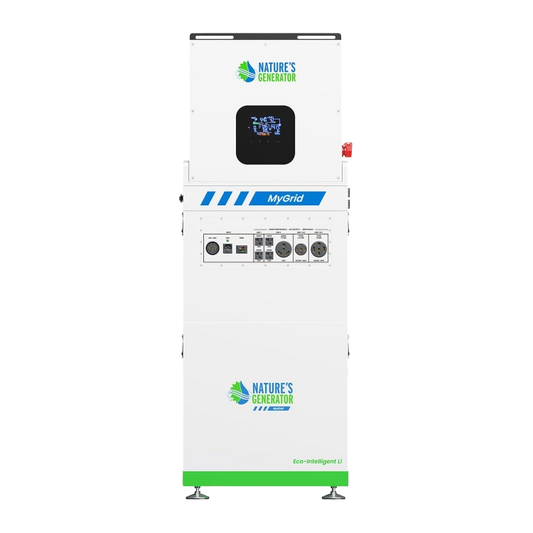
For comprehensive security and complete energy autonomy, investing in a whole home power generator is the gold standard. Our flagship Powerhouse Gen 2 system delivers a split-phase output of 120V/240V simultaneously, providing up to 7200W of continuous power. This industrial-grade capacity is specifically engineered to run heavy 240V appliances, including central air conditioning units, well pumps, and electric water heaters, allowing your family to maintain a normal lifestyle even during extended grid failures.
Case Study & Customer Feedback: Real-World Savings
Our team recently analyzed field data from a homeowner living in Phoenix, Arizona, who integrated our Powerhouse system into his property. Prior to upgrading, Marcus faced monthly July electric bills averaging $480 due to strict local TOU schedules.
By configuring his system to power his primary living areas and master bedroom cooling zones during peak evening hours, he was able to reduce his grid dependency during the high-rate window to nearly zero. His monthly bill dropped to $195, resulting in over $280 in pure savings in a single month, while providing his family with complete security against seasonal blackouts.
Buying Guide: How to Size a Solar Power Generator for Extreme Summer Loads?
To ensure your alternative power setup delivers optimal performance, you must size your system accurately based on your household's unique electrical demands.
Calculating Your Essential vs. Total Load Requirements
Every appliance features two distinct wattage ratings: running (rated) watts and starting (surge) watts. Air conditioners and refrigeration equipment require an initial burst of power to start their compressors, which can be up to three times higher than their continuous running requirements.
To accurately calculate your sizing requirements, list all the critical items you need to power concurrently. Add their running watts together to determine your continuous load requirements, and identify the single highest starting wattage to ensure your system's inverter can handle the initial startup surge.
Expanding Your Storage Capacity to Handle Long Summer Nights
Capturing clean solar energy during peak daylight hours is only half the battle; you must also store that energy to power your home through warm summer nights. By expanding your system's battery storage capacity with linkable power pods, you build a large energy reservoir. This setup allows you to run your climate control and filtration systems long after the sun goes down, without drawing a single watt from the expensive utility grid.
Conclusion
Summer should be a season of relaxation and outdoor fun, not a period of intense financial anxiety driven by unpredictable electric bills. As we have explored, the combination of surging cooling demands and aggressive utility Time-of-Use rate structures makes summer the absolute most expensive season for home electricity. Fortunately, you do not have to accept these high costs as an inevitability.
By implementing smart home strategies, optimizing your appliance efficiencies, and investing in an independent solar ecosystem from Nature's Generator, you can completely opt out of predatory peak rates.
Our Summer Sale Kickoff is officially live! Head over to our website right now to lock in your seasonal savings before the promotion ends on June 30.


