


When the power grid crashes, having reliable backup power keeps your family safe. At Nature's Generator, we know a simple flashlight won't cut it when the lights stay off for days. Modern emergencies require a clean solar power generator or a strong whole home power generator to keep your important appliances running. For extra flexibility, a portable backup power system is a lifesaver. This guide will show you exactly how to check your backup plan, figure out your power needs, and choose the right gear before a blackout hits.
Why Does a Standard Emergency Kit Fail During a Long Blackout?
Many homeowners think they are ready for a disaster because they have a plastic bin filled with bottled water, canned food, flashlights, and AA batteries. However, based on our engineering experience, standard emergency kits have a major flaw: they assume the power will come back on in a few hours. When a big storm, cyberattack, or accidents knock out the power grid for days or weeks, these basic supplies run out fast.
The hidden power gaps in traditional emergency prep
Basic emergency kits completely miss how much we rely on electricity every day. Without power, your home quickly becomes uncomfortable and even dangerous.
Think about what happens when the power stays out for a few days:
-
Food Spoils: A refrigerator can only keep food cold for about 4 to 24 hours if you keep the door shut. After that, hundreds of dollars of food goes bad, leaving you without groceries.
-
Basement Flooding: If your home uses an electric sump pump to keep water out, a power outage during a rainstorm means your basement could flood instantly.
-
Dangerous Temperatures: Without electricity to run your heater's fan in the winter or AC fans in the summer, your home can quickly become freezing cold or dangerously hot.
Flashlights and power banks vs. continuous home power backup
Small pocket power banks are built to charge a phone once or twice. They cannot run a household. Flashlights help you see, but they won't keep your internet online, your water running, or your medical devices working.
True readiness means moving away from small, one-use items. Instead, you need a reliable system that can make, store, and share its own electricity right at home.
How Do You Calculate Your Home’s Actual Power Needs for a Blackout?
The biggest mistake people make is guessing how much power they need. If you guess, you will either spend too much money on a system that is too big, or buy a system that is too small and shuts down when you try to use it.
What is the difference between starting watts and running watts?
To figure out your power needs, you need to understand how appliances use electricity. Devices use power in two different ways:
-
Running (Continuous) Watts: This is the steady amount of electricity an appliance uses to keep running after it turns on.
-
Starting (Surge) Watts: This is the quick, extra burst of power a device needs just to turn its motor on from a dead stop. This burst lasts only a few seconds, but it can be three times higher than the running watts.
For example, a refrigerator might need 800 running watts to stay cold, but it needs 2,200 starting watts the exact second the motor kicks on. If your generator cannot handle that 2,200-watt surge, it will safely shut itself off.
Essential loads vs. luxury loads: A step-by-step breakdown
Our team recommends making a list of your appliances. Separate the things you absolutely need to survive and stay safe from the things that are just nice to have.
|
Appliance / Device |
Running Watts |
Starting Watts |
Priority Level |
|
Medical Equipment (CPAP) |
40–120 |
120 |
Critical |
|
Refrigerator / Freezer |
700–800 |
2,200 |
High |
|
Sump Pump (1/3 HP) |
800 |
1,300 |
High |
|
Wi-Fi Router & Modem |
20–50 |
50 |
High |
|
LED Light Bulbs (x10) |
100 |
100 |
Medium |
|
Smart Phones / Laptops |
60–100 |
100 |
Medium |
|
Central AC / Heat Pump |
3,500 |
6,000 |
Luxury |
To find the minimum power you need, look at the items you must run at the exact same time. Take the highest starting wattage on your list and add it to the running wattages of all the other important items. This tells you the minimum size your generator needs to be.
Should You Choose a Whole Home Power Generator or a Portable Backup Power System?
Once you know how much power you need, you have to choose how to set it up. Based on our experience working with thousands of families, emergency power setups usually fall into two categories: permanent whole-home systems or portable systems on wheels.
When does a fixed, whole-house system make the most sense?
If you want your life to keep moving perfectly without missing a beat when the grid goes down, a permanent system is your best choice.
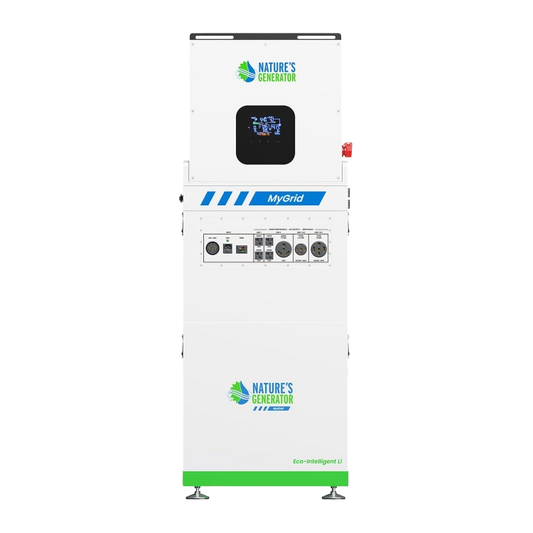
Systems Nature's Generator Elite like the Powerhouse Gen 2 connect directly into your home's main breaker panel using a transfer switch.
This setup lets you power your regular wall outlets, overhead lights, and heavy 240-volt appliances like well pumps, water heaters, and central air systems. It eliminates the need to run messy extension cords through doors and windows, making it a safe option for families or individuals with medical needs.
How does portability offer flexibility during dynamic emergency scenarios?
On the flip side, a permanent system cannot leave your house. If a wildfire or flood forces you to leave, a fixed unit stays stuck to your wall.
A mid-sized option like the Elite gives you great flexibility. These heavy-duty power stations sit on wheels so you can keep them in a closet until you need them. During a blackout, you can wheel the unit right into the kitchen for the fridge, move it to the living room to power your phones, or load it into your car if you need to evacuate.
How Do Solar Power Generators Compare to Gas Generators in a Real Emergency?
For a long time, noisy, smelly gas generators were the standard fix for a power outage. However, real-world experience during major disasters highlights serious problems with gas-powered machines.
Fuel supply lines and maintenance: The hidden liabilities of gas
When a major storm hits, gas stations lose power too, meaning they cannot pump gas. The stations that stay open end up with massive lines and fuel shortages. Gas also goes bad inside the tank within three to six months unless you add expensive chemicals.
Gas generators require regular maintenance, like frequent oil changes and spark plug swaps. Plus, they produce deadly carbon monoxide gas, so you can never run them indoors or near open windows.
Infinite fuel and silent operation: The solar power generator advantage
A solar setup solves the fuel problem completely. The sun provides a free, endless fuel supply that no blackout or gas shortage can stop.
Because solar generators do not create fumes and run completely silent, you can safely use them right inside your living room or bedroom. The silence also provides peace of mind, as it does not alert the whole neighborhood that your house has power while theirs is dark.
Customer feedback highlights this benefit. Families who survived long hurricanes reported that while their neighbors fought over gas at local stations, their solar panels kept their lights and fridges running quietly with zero extra costs.
What Steps Are Involved in a Complete Backup Power Audit?
A backup system that sits in a dusty garage for years without being checked is a major risk. To make sure your system works the exact second the power cuts out, our team recommends doing a quick three-step check twice a year.
Step 1: Testing battery health
Batteries naturally lose power over time if they sit empty. Whether your system uses Lead Acid or Lithium batteries, you need to check their health.
-
Unplug your generator from its wall charger.
-
Look at the screen to check the current battery percentage.
-
Plug in something that uses a good amount of power (like a toaster or space heater) and watch it run for an hour. If the battery percentage drops way too fast, your batteries might need to be serviced or replaced.
Step 2: Verifying switches and extra parts
If your system connects to your home's breaker panel, do not wait for a storm to test it. Turn off your home's main power switch to simulate a real blackout. Flip your transfer switch over to your generator and make sure power flows to your important rooms. Also, check all your cables and extra battery packs to ensure they are connected tightly and sharing the load correctly.
Step 3: Assessing solar panel placement and charging efficiency
Your solar panels are what keep your system alive. Check the panels for cracks, dirt, or leaves that can block the sun. Check the wires for any damage from weather or animals.
Finally, practice setting up your panels in the yard during the day. Look at your generator's screen to see how much power is coming in. Knowing exactly where the sun and shadows fall on your property helps you get the most power possible during a crisis.
Securing Total Energy Independence
Checking your home emergency plan is the difference between being truly ready and just hoping for the best. A smart backup plan requires simple math, knowing the difference between starting and running watts, and picking a reliable fuel source. Choosing clean solar power over loud, high-maintenance gas engines is the easiest way to guarantee safety for your family.
Whether your home requires a permanent whole home power generator connected right to your breaker panel, or a smaller portable system to keep the fridge and phones running, taking action now prevents trouble later. Check out the options at Nature's Generator, test your home's power needs, and make sure your family stays safe and warm when the grid goes dark.


