


At present, with all the crises happening left and right, finding a reliable backup power solution is an absolute necessity. No doubt about it. Choosing the right solar power generator depends heavily on your specific property needs and energy goals. Whether you are looking for a whole home power generator or a mobile unit, understanding the technical differences is vital for long-term satisfaction.
At Nature’s Generator, we believe in empowering homeowners with versatile options. This guide will help you decide between the mobility of a standalone unit and the seamlessness of a fully integrated home system. The best choice comes down to how you intend to distribute power during an outage or for daily use.
This blog will answer which setup offers the best return on investment, how installation differs for each, and which Nature’s Generator system aligns with your lifestyle.
Should I Use a Portable Solar Power Station or a Hardwired System for My Home?
When homeowners begin looking into solar integration, the first question is usually: "Can’t I just plug my fridge into a box?" Well, yes, although that is just one possible solution to the problem. Integration refers to how the electricity generated by your solar panels and stored in your battery reaches your appliances.
The Portable Approach: Tactical Power
A portable setup involves a self-contained unit—like the Gold System—that you can move from room to room. You physically bring the power to the appliance. In the event of a power outage, you could connect an extension cord from the generator to appliances such as a refrigerator or a phone charger.
The Hardwired Approach: Seamless Power
A hardwired setup integrates the solar station directly into your home’s electrical circuitry. This is typically achieved using a transfer switch. In this scenario, the solar station stays in a fixed location (like a garage or utility room), and when the grid goes down, you simply flip a switch on your panel to power specific circuits in your home—like your overhead lights, well pump, or primary bedroom outlets—without running any extension cords.
Users who prioritize "tactical" use (camping, occasional emergency backup for one or two items) prefer portable setups. However, those looking for a true "home-wide" experience almost always opt for a hardwired integration.
What Makes a Portable Solar Power Generator the Right Choice for Flexibility?
For many, the appeal of a portable solar power generator lies in its lack of permanence. If you are renting a home or plan to move in the next few years, a hardwired installation might not make sense.
Mobility and Multi-Use Scenarios
A portable system is not tethered to your home’s infrastructure. This means you can use the same unit to power a backyard DIY project, take it on a cross-country RV trip, or provide power to a remote cabin. Based on customer feedback, the ability to "take the power with you" is a top-tier benefit for active families.
No Electrical Skills Required
The greatest advantage of the portable setup is the "plug-and-play" nature. You do not need to hire an electrician or understand the complexities of your home’s breaker box. You simply connect your solar panels to the generator, let the sun charge the internal battery, and plug your devices into the AC outlets on the front of the unit.
Real-World Example: The "Zone" Strategy
One of our users in a hurricane-prone area uses a portable unit to manage what we call "Zone Cooling." Instead of trying to power a central AC system, they move the portable generator to a single "safe room" to run a portable AC unit and a small fridge. This targeted use extends the battery life significantly compared to trying to power the entire house.
How Does a Hardwired Solar Power System Provide Seamless Whole-Home Integration?
If your goal is to maintain a sense of normalcy during a week-long power outage, a hardwired setup is the gold standard. This method removes the "clutter" of extension cords and allows you to use your home’s existing wall outlets and light switches.
The Role of the Powerhouse and Transfer Switches
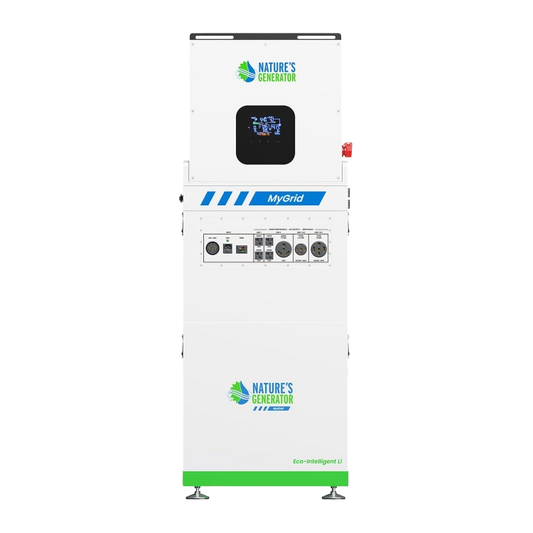
To achieve a hardwired setup, you need a high-capacity system like the Powerhouse V2. Because this unit can output 120V and 240V, it is capable of powering heavy-duty appliances like well pumps and electric ranges.
The integration happens through a Transfer Switch. We recommend the Nature’s Generator Transfer Switch, which allows you to link the generator to up to 12 individual circuits in your main electrical panel.
Professional Safety and Reliability
When a system is hardwired, it includes built-in safety mechanisms that prevent "backfeeding." Backfeeding is a dangerous situation where electricity from your generator flows back into the utility lines, potentially injuring utility workers. A hardwired transfer switch mechanically prevents this, ensuring that your home is either drawing power from the grid or from your solar station—never both on the same circuit at once.
Which Setup Is Better for Emergency Backup vs. Daily Energy Supplementation?
Deciding between these two often comes down to the frequency of use. Our team categorizes these into two distinct user intents: Emergency Resilience and Daily Offset.
Emergency Resilience (Portable)
If you only experience one or two short outages a year, a portable setup is likely sufficient. It stays in the closet or garage, and you pull it out only when the lights flicker. It is a cost-effective insurance policy that doesn’t require a permanent footprint in your home’s utility room.
Daily Energy Supplementation (Hardwired)
If you live in an area with high electricity rates or frequent "brownouts," a hardwired system allows you to use solar power every single day. By having specific circuits (like your home office or kitchen) hardwired to the solar station, you can run those rooms on "free" sun power during the day and only switch back to the grid at night. This "hybrid" lifestyle is much easier to maintain when you aren't constantly moving equipment around.
|
Feature |
Portable Setup |
Hardwired Setup |
|
Installation |
None (Plug & Play) |
Requires Electrician |
|
Mobility |
High (Wheels/Handles) |
Fixed Location |
|
Convenience |
Low (Requires Extension Cords) |
High (Uses Wall Outlets) |
|
240V Capability |
Rarely |
Yes (with Powerhouse V2) |
|
Best For |
Renters, Campers, Short Outages |
Homeowners, Long Outages, Daily Use |
How Do Transfer Switches and Panels Change the Solar Integration Experience?
To truly understand the hardwired experience, we must look at the user interface: the Transfer Switch panel. This is a smaller sub-panel installed next to your primary electrical breaker box.
Manual vs. Automatic Options
When the power goes out, the "integration" experience varies. With a manual transfer switch, you will go to the panel and flip the toggles from "Line" (Grid) to "Gen" (Generator). With an automatic transfer switch, the system detects the loss of utility power and switches over instantly.
For many Nature’s Generator users, the manual switch is preferred because it gives them total control over their battery's "burn rate." You can choose to only turn on the kitchen circuit for an hour to cook, then flip it off and turn on the bedroom circuit for the night, maximizing every watt of stored solar energy.
Circuit Selection: Prioritizing Your Needs
During a hardwired installation, you must choose which circuits to "bridge" to the solar station. Based on our experience, most homeowners prioritize:
-
The Refrigerator/Freezer: To prevent food spoilage.
-
The Well Pump: For access to water and sanitation.
-
The Internet/Modem: To stay connected to news and family.
-
Select Lighting: Usually in the kitchen and one bathroom.
By hardwiring these specific loads, you eliminate the stress of a blackout. The house functions normally, just on a more disciplined energy budget.
What Are the Real-World Installation Costs and Maintenance Requirements for Both Options?
Budget is commonly the final deciding factor. It is important to look at both the upfront cost and the long-term "effort" cost.
Portable Costs
The cost of a portable setup is strictly the cost of the hardware. For example, purchasing a Nature’s Generator Gold System is a one-time expense. There are no permits, no labor costs, and no hidden fees. Maintenance is minimal—simply keep the unit charged (via solar or wall outlet) and store it in a cool, dry place.
Hardwired Costs
A hardwired system involves the hardware plus professional labor. An electrician typically charges between $500 and $1,500 to install a transfer switch, depending on the complexity of your home’s wiring. You may also need a permit from your local building department.
However, we remind our customers to consider the "value-add." A hardwired solar backup system can increase the resale value of a home, as it is viewed as a permanent infrastructure upgrade rather than just a piece of electronic equipment.
Maintenance Comparison
Portable units require "active" maintenance—you have to remember to check them. Hardwired systems are "passive." Once installed, they sit in place, and because they are often connected to solar panels on the roof, they stay topped off automatically. We’ve heard from many customers that the "peace of mind" of a hardwired system is worth the extra upfront investment because they never have to wonder if the battery is ready.
Which Integration Path Is Right for You?
Choosing between a portable and hardwired solar setup is a choice between flexibility and seamlessness.
To summarize our findings:
-
Choose a portable setup if you are a renter, a frequent traveler, or someone who only needs to keep a few small devices running during a short emergency. It is the most affordable and versatile way to enter the world of solar backup.
-
Choose a hardwired setup if you are a homeowner looking for a robust, hassle-free solution. By integrating a Nature’s Generator Powerhouse with a transfer switch, you transform your home into a resilient fortress capable of weathering long-term grid failures with minimal disruption to your lifestyle.
At Nature’s Generator, we designed our systems to grow with you. You can start with a portable unit today and, as your needs expand, integrate it into your home’s wiring later using our specialized transfer kits. No matter which path you choose, the goal is the same: ensuring your family has power when the rest of the world goes dark.


