


Transitioning to a lifestyle that prioritizes energy independence requires a deep understanding of your daily consumption. Whether you are prepping for a weekend in a converted van or setting up a cabin in the woods, finding reliable backup power is the foundation of a successful setup. At Nature’s Generator, we believe that true autonomy comes from mastering the numbers behind your gear. One of the most common questions our team receives from adventurers and homeowners alike is: How much electricity does a mini fridge use off-grid?
When you rely on a solar power generator or a whole-home power generator, every watt-hour counts. Refrigeration is often the largest consistent draw on an off-grid system because, unlike a microwave or a power tool, it never truly turns off. This guide will break down the complex math of compressor cycles, ambient temperatures, and battery capacities to ensure your food stays cold without draining your reserves.
How Many Watts Does a Standard Mini Fridge Actually Consume?
When evaluating a mini fridge, you must distinguish between two different numbers: the nameplate rating and the actual consumption. Most mini fridges are rated between 50 and 100 watts. However, based on our experience testing various appliances with our power systems, the "running watts" only tell half the story.
The most critical factor in off-grid math is the "startup surge." Mini fridges use compressors to move refrigerant. When that compressor kicks on, it can require three to six times its running wattage for a fraction of a second. If your fridge runs at 80 watts, it might spike to 400 or 500 watts just to start. If your power source cannot handle this surge, the fridge won’t cool, regardless of how much total energy you have stored.
Furthermore, a fridge does not run 24 hours a day. It operates on a "duty cycle." Once the internal thermostat reaches the desired temperature, the compressor shuts off. In a controlled environment, a fridge might only run for 15 to 20 minutes of every hour. Therefore, an 80-watt fridge doesn’t consume 1,920 watt-hours (Wh) a day (80W x 24h); it likely consumes closer to 450Wh to 600Wh.
What Factors Impact Mini Fridge Power Consumption Off-Grid?
In an off-grid scenario, your environment is rarely as stable as a climate-controlled kitchen. Our team has identified several real-world variables that can cause your energy math to deviate from the manufacturer's estimates:
-
Ambient Temperature: High external temperatures are a major "power thief." Storing a mini-fridge in a 90°F van forces the motor to stay engaged for extended periods, which can double or even triple your daily energy consumption as it struggles to keep the interior cold. This can double or triple your daily watt-hour consumption.
-
Ventilation: Mini fridges expel heat from the back or sides. If you build a fridge into a tight cabinet without proper airflow, the heat builds up, forcing the unit to run constantly. We always recommend leaving at least two inches of clearance around the cooling coils.
-
Contents and Thermal Mass: A full fridge actually stays cold more efficiently than an empty one. Cold items (like water bottles) act as thermal "batteries," helping maintain the temperature when the door is opened.
-
Door Seal Integrity: Off-grid life can be bumpy. If the gasket on your fridge door becomes misaligned or worn, cold air leaks out. Based on our observations, a faulty seal can increase energy draw by 25% or more.
How Long Can a Portable Power Station Run a Mini Fridge?
To calculate runtime, you need two numbers: the usable capacity of your power station and the average daily draw of your fridge. Most users find that a high-quality portable power station, such as the Nature's Generator Lithium 1800, provides the perfect balance of portability and capacity for this task.
Let’s look at the math:
-
Average Mini Fridge Draw: 500Wh per 24 hours.
-
Power Station Capacity: 1,440Wh (typical for mid-range units).
-
Inverter Efficiency: Most inverters are about 85-90% efficient. 1,440Wh x 0.85 = 1,224Wh of usable energy.
-
Total Runtime: 1,224Wh / 500Wh per day = 2.44 days.
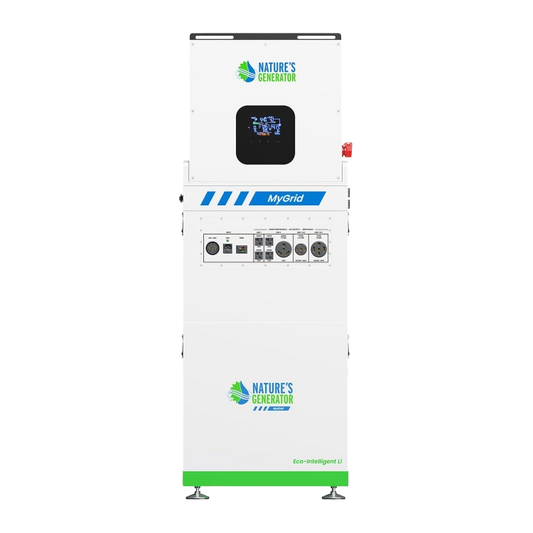
In this scenario, you could run your fridge for roughly 58 hours without any solar input. If you are using a larger system like the Nature's Generator Powerhouse V2, which is designed for more heavy-duty applications, your runtime extends significantly, often allowing for multiple appliances to run alongside the fridge for several days.
Can a Solar Generator Keep a Mini Fridge Running Indefinitely?
The goal of most off-grid enthusiasts is "net-zero" consumption, where the energy harvested from the sun during the day equals or exceeds the energy consumed over 24 hours. To achieve this, you must account for the "overnight gap."
During the day, your solar panels must do two things simultaneously:
-
Power the fridge while the sun is up.
-
Refill the battery enough to power the fridge through the 12-14 hours of darkness.
If your fridge uses 500Wh daily, you need to harvest at least 600-700Wh of solar energy to account for conversion losses. In a region with 5 hours of "peak sun," you would need at least 140 watts of solar panels dedicated strictly to the fridge. However, we always suggest over-provisioning. Weather is unpredictable; a cloudy day can drop your solar harvest by 70%. We recommend a minimum of 200W to 300W of solar input to ensure that even on suboptimal days, your fridge remains powered.
Compressor vs. Thermoelectric: Which Is Better for Off-Grid?
If you are shopping for a mini fridge specifically for off-grid use, the technology inside matters more than the size. There are two primary types:
Compressor Fridges (Recommended): These work exactly like your home refrigerator. They are highly efficient, can reach freezing temperatures, and handle varying ambient temperatures well. While they have a "startup surge," their overall energy consumption is much lower because they cycle on and off. Most dedicated "12V travel fridges" use high-efficiency DC compressors that bypass the need for an inverter, saving even more power.
Thermoelectric Coolers (Avoid for Long-Term Off-Grid): These use the Peltier effect to create a temperature differential. They have no moving parts other than a fan, but they are incredibly inefficient. They typically run 100% of the time and can only cool to about 30-40 degrees below the ambient temperature. A thermoelectric cooler will often draw 5 amps continuously, which can kill a medium-sized battery in less than half a day.
Real-World Scenarios: From Van Life to Emergency Home Backup
To better understand how these numbers translate to real life, let’s look at two scenarios based on feedback from our community:
Scenario A: The Weekend Camper. A user takes a standard 3.2 cubic foot dormitory-style mini fridge on a weekend trip. They use a portable solar generator. Since the fridge is pre-chilled at home, the compressor only needs to maintain the temperature. Even in 80°F weather, the fridge draws about 40Wh per hour. With a 100W solar panel attached to their generator, they find they can stay out indefinitely because the panel generates roughly 400-500Wh a day, perfectly offsetting the fridge’s consumption.
Scenario B: The Emergency Home Backup. During a utility outage, a customer uses their whole-home power generator to keep their kitchen mini-fridge and a few LED lights running. Because they are using a 120V AC fridge, the inverter on the generator stays on constantly. They noticed that keeping the fridge full of frozen water jugs helped the compressor stay off for longer periods, extending their battery life from 24 hours to nearly 36 hours before needing a solar recharge.
How to Calculate Your Daily Amp-Hour Requirements
For those using deep-cycle batteries or DIY solar builds, you may prefer to calculate in Amp-Hours (Ah) rather than Watt-Hours. Since most off-grid batteries are 12V, the conversion is simple: Watts / Volts = Amps.
If your mini fridge uses 500Wh per day: 500Wh / 12V = 41.6 Ah per day.
However, you should never drain a Lead-Acid or AGM battery below 50% capacity. This means to support a 41.6 Ah daily draw, you would need at least an 85 Ah to 100 Ah battery just for the fridge. If you use Lithium (LiFePO4) batteries, which can be safely discharged to 80-90%, a 60 Ah battery would suffice. Understanding this "usable capacity" is what separates a successful off-grid build from one that leaves you in the dark.
Expert Tips to Reduce Your Mini Fridge Energy Footprint
Based on our experience helping thousands of customers transition to solar power, we’ve gathered several practical hacks to squeeze more life out of your batteries:
-
Pre-Chill Everything: Never put warm leftovers or room-temperature soda in an off-grid fridge. Chill them using "shore power" or a traditional cooler with ice first.
-
Organize Your Fridge: The less time the door is open, the less energy is wasted. Know where your items are so you can grab them quickly.
-
Use a Remote Thermometer: Monitoring the temperature from outside the fridge allows you to see if the unit is struggling without opening the door and letting the cold air escape.
-
Adjust for Nighttime: At night, the ambient temperature usually drops. You can often turn the thermostat down (warmer) slightly before bed to prevent the compressor from running as often while the solar panels are inactive.
-
Check the Gasket: Take a dollar bill, place it halfway in the door, and close it. If you can pull the bill out with no resistance, your seal is weak and needs replacement or cleaning.
Mastering the Math for Off-Grid Success
Understanding the energy math behind a mini fridge is the difference between a spoiled meal and a successful off-grid experience. While these appliances are convenient, they require a calculated approach to power management. By accounting for startup surges, duty cycles, and environmental factors, you can ensure your refrigeration needs are met without overstressing your system.
Nature’s Generator is committed to providing the tools and knowledge necessary for energy independence. Whether you are looking for a compact solution for your vehicle or a robust system for your home, our range of products is designed to handle the energy challenges of modern life.


