


The modern household faces a growing paradox: as our lives become more digitally integrated, our reliance on a stable power grid intensifies just as that grid becomes increasingly vulnerable. Whether it is a seasonal storm, a heatwave-induced rolling blackout, or a long-term infrastructure failure, the question is no longer if the power will go out, but how you will maintain your quality of life when it does.
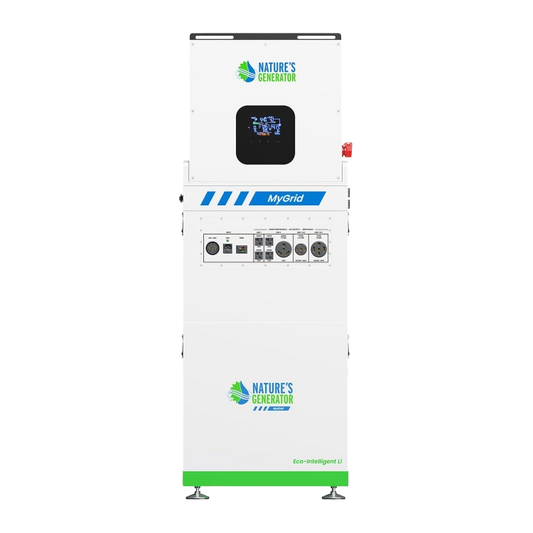
Choosing a home power generator is an investment in peace of mind. This kind of system is silent, emission-free, and—when paired with solar panels—capable of indefinite operation. However, one size fits all does not exist in the world of backup power. To ensure your refrigerator keeps food safe and your medical devices stay active, you must master the art and science of sizing.
Phase 1: Identifying Your Critical Load
Before looking at product catalogs, you must define what critical means for your household. In a total blackout, trying to power your entire home—including the electric dryer and the central AC—is an expensive and often inefficient goal. Instead, focus on the essentials that keep a home functional and safe.
-
Food Preservation: Refrigerator and freezer units are the top priority.
-
Communication & Light: Wi-Fi routers, phone chargers, and a few LED lamps.
-
Water & Safety: Sump pumps to prevent flooding or well pumps for fresh water.
-
Medical Needs: CPAP machines, oxygen concentrators, or refrigerated medication.
-
Climate Control: A small space heater or a portable AC unit.
Beyond these basics, many homeowners wonder how much electricity does a chest freezer use compared to a standard fridge. Generally, a chest freezer is quite efficient because the cold air stays inside when the lid is opened, typically requiring between 30W and 100W while running. Knowing these specific numbers helps you avoid buying more battery than you actually need.
Phase 2: The Math of Power – Watts vs. Watt-Hours
Sizing a solar generator system requires understanding two distinct metrics: Output Power (Watts) and Capacity (Watt-Hours). Think of Watts as the speed of a car and Watt-Hours as the size of the gas tank.
1. Running Watts vs. Surge (Starting) Watts
Every appliance has a running wattage, which is the energy it uses once it is operational. However, appliances with motors—like your refrigerator or sump pump—require a massive burst of energy to start. This is called Surge or Starting Watts.
For instance, a modern refrigerator might run on 200W, but it could require 1,200W for a split second just to kick the compressor into gear. Consequently, your system’s inverter must have a peak rating high enough to handle the largest single surge in your home, plus the running watts of everything else currently turned on.
2. Battery Capacity (Watt-Hours)
This measures how much total energy the unit stores. It determines how long you can run your devices. To calculate this, multiply the device watts by the hours of use. If you run a 60W laptop for 5 hours, you have consumed 300Wh of your battery.
Phase 3: Creating Your Load Profile
To size your equipment accurately, create a realistic table. Be mindful of duty cycles; for example, a refrigerator stays plugged in all day, but the motor only runs about 30% of that time.
|
Appliance |
Running Watts |
Startup Watts |
Est. Hours/Day |
Daily Wh Needed |
|
Refrigerator |
$200W$ |
$1,200W$ |
8 (active) |
$1,600Wh$ |
|
Wi-Fi Router |
$20W$ |
$20W$ |
24 |
$480Wh$ |
|
LED Lamp (x2) |
$20W$ |
$20W$ |
5 |
$100Wh$ |
|
Phone/Laptop |
$60W$ |
$60W$ |
4 |
$240Wh$ |
|
TOTALS |
$300W$ |
$1,300W$ |
-- |
$2,420Wh$ |
The Buffer Factor
Never size your system to the exact number. Inverters lose about 10–15% of energy to heat during the conversion process. Additionally, batteries should rarely be drained to absolute zero. Therefore, it is wise to multiply your total Daily Wh by 1.25 to provide a safety margin. In the example above, you would want a battery with at least 3,000Wh of capacity.
Phase 4: Sizing the Solar Input
A backup unit is just a battery until you add panels. To remain energy independent during a multi-day outage, your solar panels must be able to recharge the battery as fast as you use it. Go for something that allows for versatile input options.
The math for solar panels involves Peak Sun Hours—the number of hours per day the sun is strong enough to produce maximum power. In many regions, this averages between 3 and 5 hours. If you consume 2,420Wh daily and have 4 hours of peak sun, you need at least 605W of solar panels to break even. Because weather is unpredictable, over-paneling is a smart strategy to ensure you stay powered even on cloudy days.
Phase 5: Battery Chemistry and Durability
The industry has shifted toward Lithium Iron Phosphate (LiFePO4) for good reason. While older lead-acid or standard lithium-ion batteries are common, LiFePO4 offers superior longevity and safety. These batteries can handle thousands of charge cycles, meaning they will last for a decade or more of regular use. Furthermore, they are much more stable under high-heat conditions, making them ideal for home backup environments.
[Image comparing the discharge curves of Lead Acid vs Lithium Iron Phosphate batteries]
Summary Checklist for Buyers
When you are ready to secure your home’s energy future, verify these three vital figures on the spec sheet:
-
Continuous AC Output: Does it meet your total running watts?
-
Surge Capacity: Can it handle the refrigerator or sump pump startup?
-
Expansion Potential: Can you add extra battery modules later if your needs grow?
Ultimately, sizing a solar generator system isn’t about finding the biggest unit on the market; it’s about matching your unique critical load to a reliable power source. By doing the math now, you transform a potential emergency into a manageable situation.


