


What if your home battery could do more than keep the lights on during an outage? Depending on where you live and which program you join, it could also help support the power grid and earn you bill credits.
That is the idea behind a virtual power plant (VPP). Instead of relying entirely on large power stations, utilities can coordinate energy stored in home batteries, generated by solar panels, or saved by smart appliances. For homeowners looking into reliable backup power, a solar power generator, a whole home power generator, or portable backup power, this opens up another way to think about energy.
Nature’s Generator offers home energy systems built around battery storage and backup power. But how do these systems fit into a VPP, and is joining one actually worth it?
Let's look at how the technology works, what homeowners can gain, and what to check before investing in equipment or signing up for a program.
What is a virtual power plant, and how does it work differently from a traditional power plant?
A virtual power plant connects smaller energy resources and coordinates them through software. The resources stay where they are, often inside homes and businesses, but they can work together when the grid needs help.
A traditional power plant generates electricity at one location. A VPP takes a different approach by bringing together resources such as:
-
Home batteries that store electricity and release it when needed.
-
Rooftop solar panels that produce power during the day.
-
Electric vehicles and compatible chargers that can adjust charging schedules or supply energy through supported vehicle-to-grid systems.
-
Smart thermostats and water heaters that can temporarily reduce electricity use.
-
Commercial batteries and other flexible energy equipment.
One home battery will not do much to support an entire city. Thousands of connected batteries are a different story.
The U.S. Department of Energy reported that virtual power plants had reached around 33 gigawatts of capacity across North America by January 2025. Its research also identified the potential to deploy 80–160 GW by 2030.
That is a projection, not a promise. Reaching it will depend on equipment costs, customer participation, utility programs, and local regulations. Still, it shows why energy companies are paying closer attention to what homes can contribute.
Source: U.S. Department of Energy's virtual power plant update.
How does a virtual power plant work when electricity demand rises?
The process is easier to understand with a real-world example.
Picture a hot summer afternoon in the United States. Air conditioners are running across the neighborhood. People are getting home from work, cooking dinner, and plugging in their electric vehicles. Electricity demand climbs just as the grid is under pressure.
A VPP can help by coordinating available energy resources.
First, participating homes and businesses connect eligible equipment to a VPP provider. The provider uses software to monitor energy availability, demand, and other operating conditions.
When electricity demand is expected to rise, the provider can send instructions to participating devices. Some home batteries may discharge stored electricity. Smart thermostats might make small temperature changes, while EV chargers can wait to charge until electricity demand drops.
Each device follows the limits set by its equipment and participation agreement. Not every battery will respond in the same way, and some programs focus on reducing demand rather than supplying electricity.
The combined effect is what matters. Instead of asking conventional power plants to meet every increase in demand, utilities can draw on a network of smaller resources already connected to the grid.
Depending on the program, homeowners could earn bill credits or get other rewards for taking part.
There is an important distinction here: a VPP is not a single battery or a new type of generator. It is a way to coordinate equipment that already exists. The software, communication systems, and program rules make those separate resources work together.
Why are virtual power plants becoming more important now?
Electricity demand is changing, and utilities need more ways to manage it without relying only on building additional power generation and grid infrastructure.
Electric vehicles, data centers, heat pumps, and other electrical loads are adding pressure in some regions. Demand also rises and falls throughout the day. A utility may have enough electricity under normal conditions but still face a problem during a particularly hot afternoon or an evening peak.
Home batteries can help fill that gap. They store electricity when it is available and release it when demand is higher. Smart devices offer another option: they can shift some electricity use to a different time.
There is also a growing supply of equipment that can participate. More households have solar panels, home batteries, and connected appliances than in the past. A VPP gives utilities a way to coordinate those resources rather than treat every home as an isolated electricity customer.
Policy is helping move things along, too. In the United States, FERC Order No. 2222 helps enable aggregations of distributed energy resources to participate in eligible regional wholesale electricity markets.
That does not mean every homeowner can sign up today. Market rules, utility offerings, and equipment requirements vary by location.
The bigger shift is that home energy equipment can serve two purposes. It can help a household manage its own electricity, and, when the right program is available, it can help the wider grid manage demand.
Can you actually save money by joining a virtual power plant?
You may be able to, but the financial benefit depends on the program. Some offer fixed incentives or bill credits. Others pay according to participation, performance, or the energy a battery provides during certain events.
For example, Tesla's published information for its Virtual Power Plant program with Salt River Project (SRP) in Arizona states that eligible Powerwall owners can earn up to $264 per Powerwall annually in energy bill credits for sharing energy during high-demand events.
That is a program-specific figure, not a typical payout that every VPP participant should expect. Eligibility requirements, event conditions, and compensation rules apply.
Source: Tesla's Virtual Power Plant program with SRP.
Before looking at the potential earnings, check what you need to spend and what you are agreeing to.
Start with equipment costs. If you already have a battery that works with the program, you might be able to join without spending much on new equipment. Buying a battery solely for VPP payments is a bigger financial decision. Compare the total equipment and installation costs against realistic program rewards.
Read the payment terms. A provider advertising maximum earnings may be describing the best possible outcome, not what every customer receives. Check how payments are calculated and whether they depend on the number of events or the amount of energy supplied.
Ask how often your battery may be used. Frequent events could mean more opportunities for compensation, but they may also affect when stored energy is available for your home.
Look at the electricity rate. Your savings may depend on when you buy electricity, when the battery charges, and whether the program changes your usual energy routine.
A VPP can make a home battery more useful, but it does not automatically make the investment profitable. Run the numbers using your actual electricity rates, equipment costs, and the program's written terms.
Will a virtual power plant use up the battery you need during an outage?
This is probably the biggest concern for homeowners who want backup power first and grid participation second.
The two uses can compete for the same stored electricity. A battery that sends energy to the grid has less energy available for the home unless it can recharge before it is needed.
Imagine your battery is charged to 80% before a VPP event. The program calls for some of that energy, and then an unexpected outage happens later that evening. Unless your system has retained enough energy or recharged, you may have less backup time than you expected.
Some programs and systems allow homeowners to set a minimum backup reserve. Others have different controls and participation rules. Never assume you can reserve a particular percentage without checking the actual equipment and program.
Before enrolling, ask four straightforward questions:
-
Can I set a minimum battery reserve for emergencies?
-
Can I opt out of an event when I expect severe weather or another outage risk?
-
What happens to the battery's operation if the grid goes down?
-
Will participation affect my warranty or equipment agreement?
Also, a VPP does not guarantee that your home will remain powered during an outage. Your system must support backup operation, with the appropriate installation and equipment to isolate your home safely from the grid.
For households that experience frequent outages, the priority should be clear: work out how much electricity you need for essential appliances, make sure the battery can support those loads, and protect an adequate reserve before chasing VPP rewards.
What equipment do you need to join a virtual power plant?
There is no universal equipment list. Some programs need a compatible home battery and inverter. You can also take part in some programs through smart thermostats, water heaters, or EV chargers without needing a home battery..
If you are considering a battery-based VPP, start with these checks.
Battery capacity and output. Capacity tells you how much energy the battery stores, usually in kilowatt-hours. Output, measured in kilowatts, tells you how much power it can supply at a given time. You need enough of both for the loads you want to run.
Compatibility. Your battery, inverter, monitoring system, and other equipment must meet the program's requirements. Owning a solar battery is not enough on its own.
Connectivity. The provider may require an internet connection and permission to communicate with your system. Find out what data is collected and how the equipment is controlled.
Installation requirements. Grid-connected equipment may need permits, utility approval, or specific electrical configurations. Confirm these requirements before buying anything.
Room to expand. If your household may need more storage later, look for a system that supports compatible expansion.
These details are worth checking before purchase, especially if VPP participation is one of your main reasons for investing. A system can be excellent for home backup without being eligible for a specific grid program.
What should you look at when comparing virtual power plants with home battery systems?
Look at the VPP agreement and the hardware separately. One determines how the program uses your equipment and compensates you. The other determines whether your home has the power it needs.
|
What to compare |
What to check before deciding |
|
Compensation |
How payments work and whether advertised earnings are guaranteed or conditional |
|
Backup reserve |
Whether you can keep enough stored energy for an outage |
|
Compatibility |
Whether the provider accepts your exact equipment model |
|
Power output |
Whether the system can run your essential appliances together |
|
Battery capacity |
Whether it can cover your expected energy use for the required period |
|
Charging options |
Whether solar or AC charging fits your home and daily routine |
|
Participation rules |
How often events occur and whether you can opt out |
|
Expansion |
Whether you can add compatible storage as your needs change |
Your own situation should drive the decision.
A household mainly interested in reducing electricity costs might benefit from a battery that stores solar energy or shifts consumption away from expensive hours. A household that regularly loses power should focus first on outage duration, essential loads, charging access, and backup reserves.
EV owners have another option to investigate. Some programs reward drivers for moving charging to off-peak hours. Sending electricity from an EV back to a home or the grid is a separate capability that requires compatible vehicles, chargers, and program support.
In other words, do not buy a system because it might qualify for something later. Start with what you need it to do now, then check whether VPP participation adds enough value to matter.
What are homeowners saying about virtual power plants?
One concern comes up repeatedly in discussions about home batteries and grid programs: people want to know who controls the energy they paid to store.
That concern is reasonable. Buying a home battery can cost a lot, and you may also need it to keep your home running during a power outage. Potential earnings are less appealing if the program's rules are unclear or the homeowner feels they have lost control over their own backup supply.
Consumer research from Energy Consumers Australia has explored barriers to battery adoption and VPP participation, including limited awareness, concerns about control, and trust in providers. The research focuses on Australian consumers, so it should not be treated as representative of U.S. households. Still, these are useful questions for anyone comparing programs.
Source: Energy Consumers Australia's consumer energy research.
When reading customer reviews or asking other battery owners about their experience, look for details that affect daily use. How often are events called? Are payments easy to understand? Can owners maintain their backup reserves? Does the system behave as expected when the grid goes down?
Those answers are more useful than a headline about maximum annual earnings.
You can use the same thinking when choosing a home backup power system. Look beyond the advertised output and battery capacity. Check how the system charges, whether it can be expanded, what installation it requires, and how its controls fit your household's routine.
How does Nature’s Generator fit into a virtual power plant strategy?
A home energy system should make sense for your household before you consider using it to support the grid.
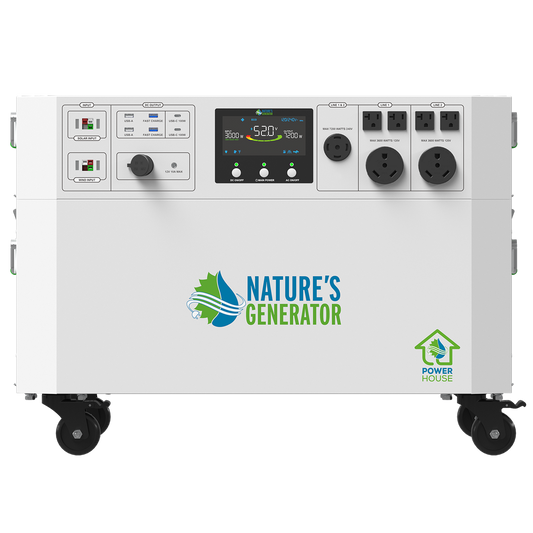
Nature’s Generator offers products for different backup needs, from portable power to larger home battery systems. For example, the MyGrid 10K home battery backup system delivers 10,000 watts of continuous power and stores 10,496 watt-hours of energy in its LiFePO₄ battery.
That combination gives homeowners a starting point for planning which appliances to support, how much energy to keep available, and what charging options fit their setup. Depending on the configuration, the system can also support expandable storage and integration with compatible existing grid-tied solar equipment.
But these capabilities do not automatically qualify a system for a VPP. If you plan to join a virtual power plant program, check with your utility company or program provider before buying equipment to make sure it qualifies. Confirm the exact model, inverter setup, communication requirements, and installation conditions.
A portable system may be a better fit for someone who needs to power a few essential devices. A larger battery system may make more sense for a household trying to cover selected home circuits or a broader range of loads.
There is no need to start with the biggest system available. Start with your loads, your expected outage duration, your charging options, and your budget. Then compare systems against those needs.
Is joining a virtual power plant worth it for your home?
Virtual power plants offer another way to get more out of your home energy equipment. If your battery qualifies, it can share stored power when demand is high. Smart appliances and EV chargers can also help shift your electricity use to different times of the day. Depending on the program, participants may receive bill credits or other rewards.
The trade-off is that joining a VPP can affect how and when your equipment operates. Eligibility is not universal, payments vary, and the energy used for grid events may also be energy you would rather keep for an outage.
So take the decision in the right order. Work out what your home needs during everyday use and power cuts. Check battery capacity, output, charging options, and reserve controls. Then compare available VPP programs and read their terms carefully.
Nature’s Generator can help address the home backup side of that plan through its range of solar generator and battery systems. The key is to choose equipment that meets your needs today, with VPP participation treated as an additional opportunity—not a benefit you should assume will be available or guaranteed.


